Pembroke Welsh Corgi
Bred to boss cattle. Never really stopped.
For her eighteenth birthday, in April 1944, Princess Elizabeth was given a corgi puppy named Susan. Three years later, Susan rode along on the royal honeymoon, hidden under blankets in the open carriage — the future queen had simply declined to leave her behind. That set the pattern for a reign: over seven decades, Elizabeth II owned more than thirty corgis, essentially all of them Susan’s descendants, down through some fourteen generations. The most photographed woman of the twentieth century, offered any animal on earth, kept choosing the same short-legged Welsh cattle dog. The cattle dog part is not a footnote.
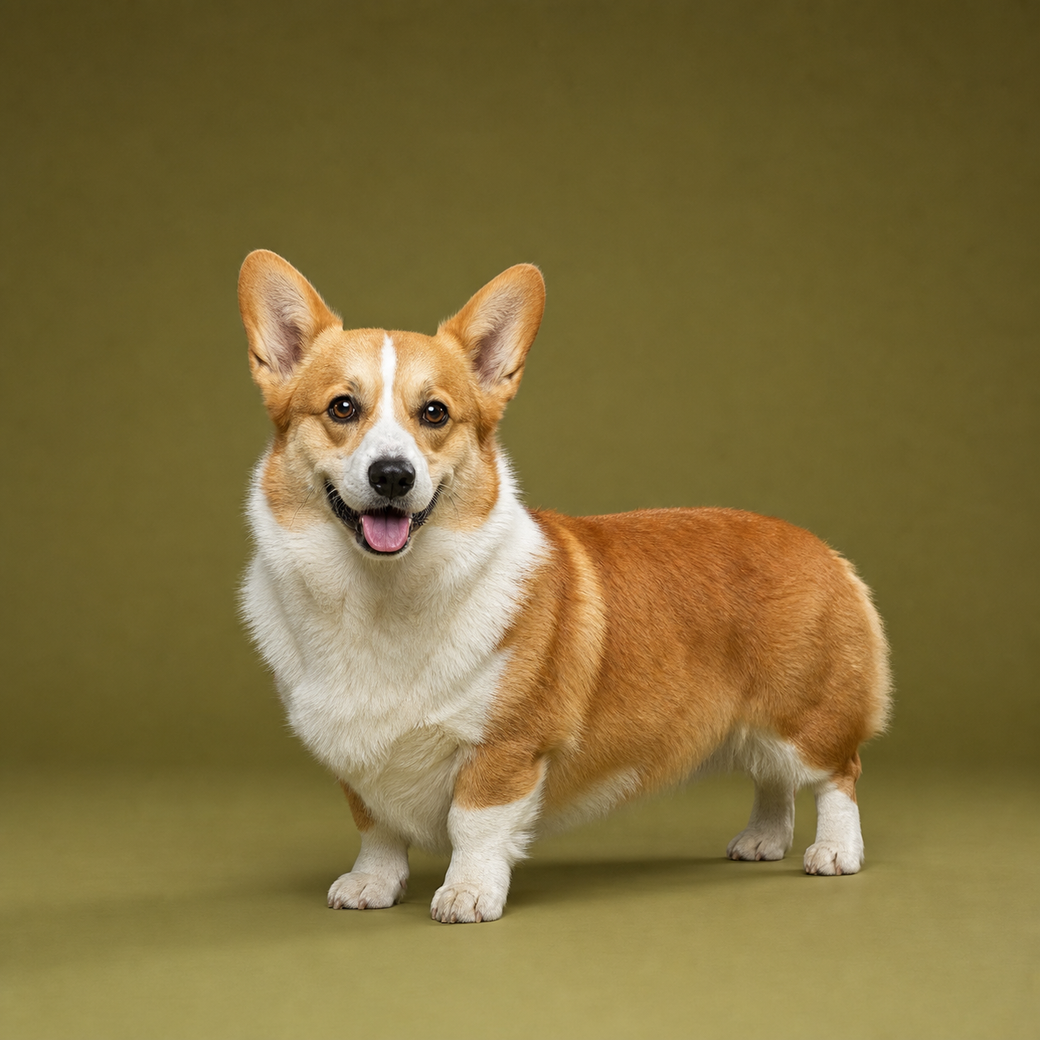
A big dog, efficiently packaged
Welsh folklore got there first: corgis, the old stories say, were the dogs of the fairies — pulling their tiny coaches, carrying fairy warriors into battle — and the darker markings over a Pembroke’s shoulders are still called the fairy saddle, where the riders sat. The daytime job was less whimsical. For centuries these dogs drove cattle through Welsh lanes, nipping heels and ducking kicks, built low so the hooves passed overhead. Everything people love in a corgi — the boldness, the bossiness, the self-importance — is a heeler’s toolkit with nowhere to clock out.
Living with one means living with middle management. Corgis supervise: they announce visitors, consolidate the family in one room, and may tidy stray ankles — children’s included — which is instinct, not malice, and redirects with training. They are cheerful, clever, quick to learn, and genuinely loud when they feel the situation calls for comment. The coat sheds seriously, every day, with two great seasonal blowouts. Mind the long back — discourage stair sprints and couch dives — and mind the bowl, because the appetite is legendary. The company is worth every hair.
Keeping one happy
Grooming
The thick double coat sheds year-round and lets go twice a year in drifts: brush a few times weekly, daily during blows, with an undercoat rake for the heavy season. Baths loosen the undercoat helpfully mid-blow. Never shave a double coat. The upright ears collect dust — check them weekly.
Training
A delight, mostly — corgis are bright, food-driven herders who learn fast and enjoy having duties. Channel the instincts early: teach a quiet cue before barking becomes editorial policy, and redirect heel-nipping to toys from puppyhood. They excel at agility, rally, and herding trials, where the bossiness finally becomes a paid position.
Exercise
More than the legs suggest: a solid hour a day of walks and real play, ideally with problem-solving in it. A corgi is a working dog on a compact chassis, not a couch ornament. Keep jumping modest to protect the long back, and let fetch happen on the flat.
Diet
Feed to the waistline, because corgis eat like dogs three times their size and gain weight with terrible efficiency — and every extra pound loads a long spine on short legs. Two measured meals, treats subtracted from the total, and a monthly hands-on rib check. Lean is structural insurance.
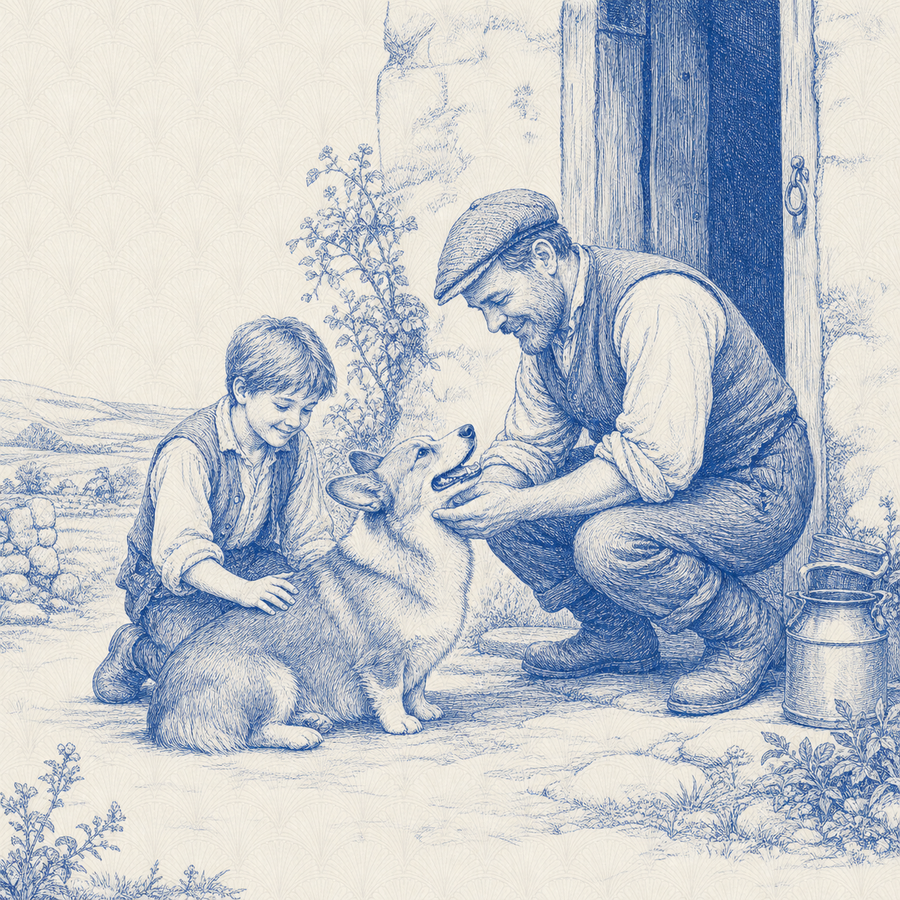
A thousand years in the cattle lanes
Corgis worked Pembrokeshire for centuries as cattle drovers and farmyard sentries; lore credits Flemish weavers with bringing the ancestors to Wales around 1107. The name likely means, bluntly, “dwarf dog.” Britain’s Kennel Club took the corgis in from 1928, and in 1934 the Pembroke and the Cardigan were declared separate breeds — the Pembroke keeping the shorter tail and, soon, the larger fan club.
Questions, answered
Do Pembroke Welsh Corgis shed a lot?
Heavily — daily shedding plus two big seasonal blows. Regular brushing manages it; nothing eliminates it. Not remotely hypoallergenic.
Are corgis good with kids?
Generally yes — playful and devoted — but the herding instinct can mean nipped ankles during games. Train it early and supervise the small ones.
What’s the difference between a Pembroke and a Cardigan?
Separate breeds since 1934. Pembrokes are slightly smaller with docked or naturally short tails; Cardigans are longer-bodied with full, foxy tails and rounder ears.
Can corgis handle stairs and apartments?
Apartments, happily, with real daily exercise. Stairs in moderation — the long back is the breed’s weak point, so limit repeated jumping and stair sprints.