Pomeranian
Thirty working pounds, edited down to seven.
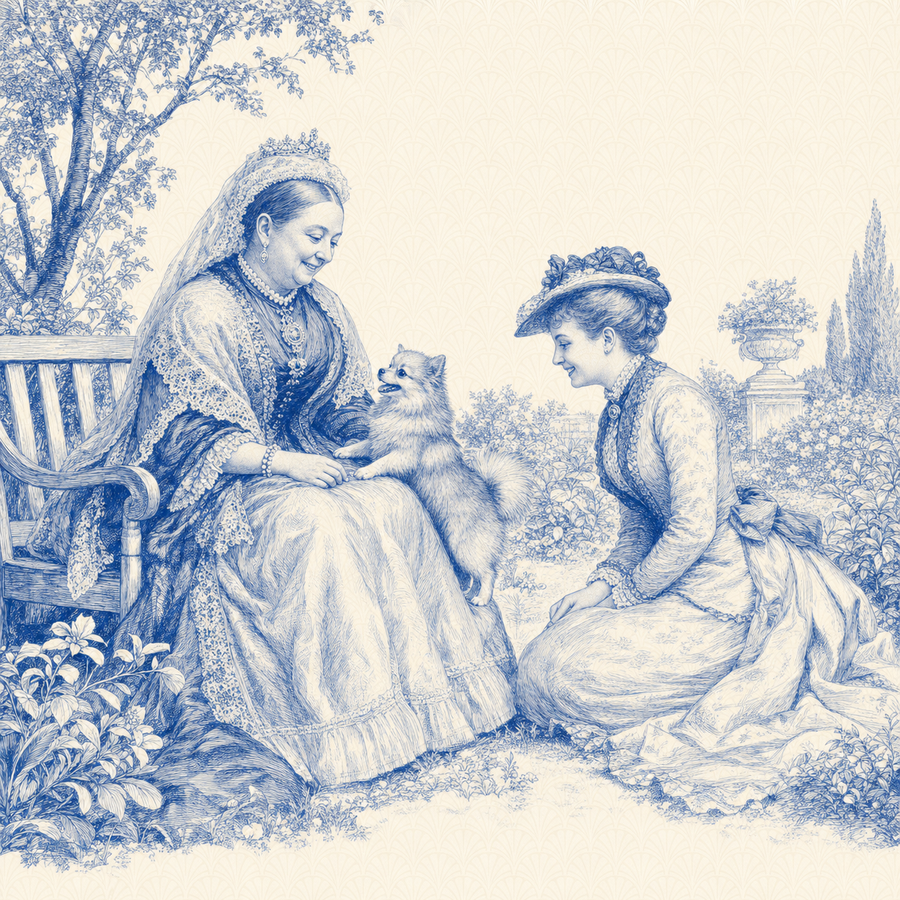
On January 22, 1901, Queen Victoria lay dying at Osborne House, and she asked for a dog: Turi, her favorite Pomeranian, was carried in and placed on the bed. The longest reign in British history to that point closed with a Pom stationed at the royal feet. It was a fitting last appointment. Victoria had fallen for the breed late in life and then reshaped it — during her decades of enthusiasm, the Pomeranian’s average size fell by roughly half, from small dog toward ornament. The ornament, it should be said, never got the memo about being one.
A working spitz, in miniature
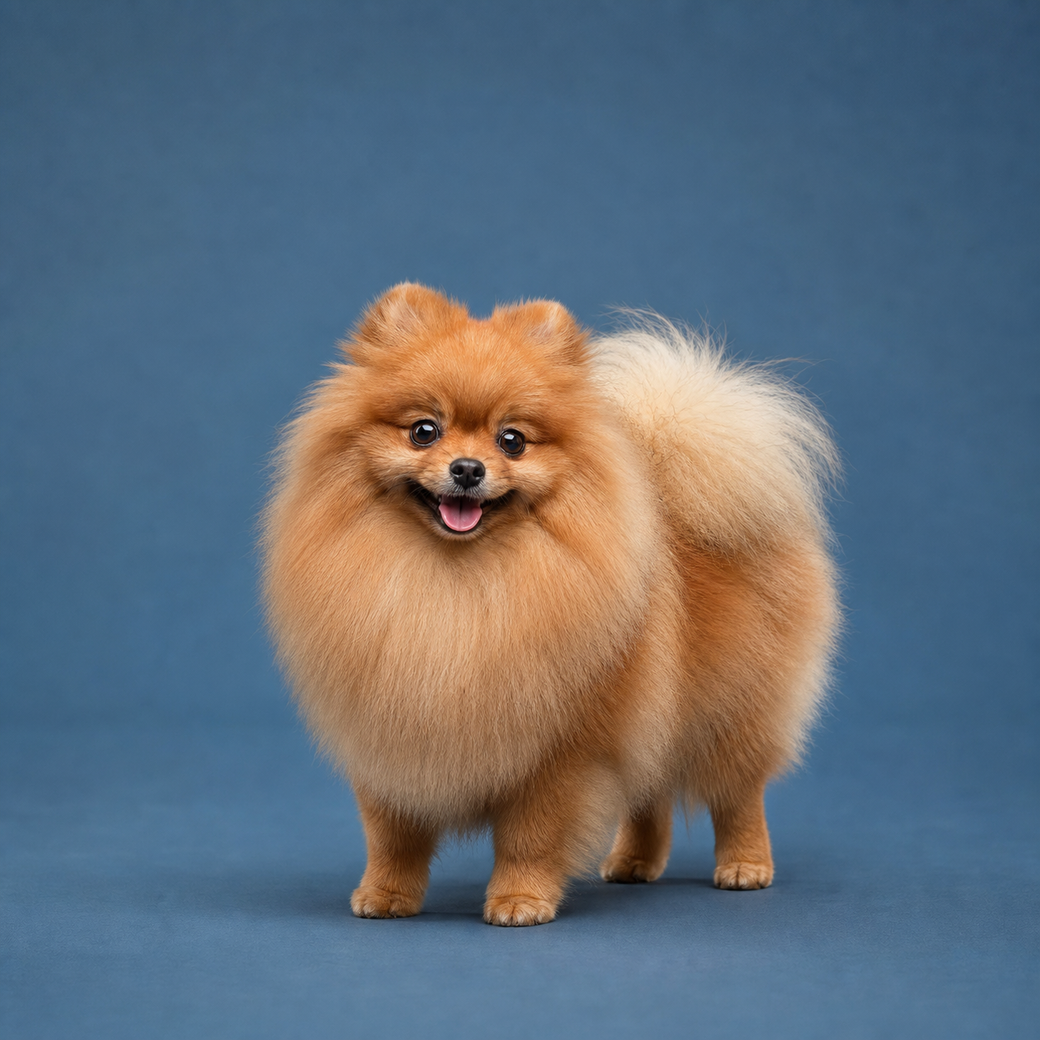
Eleven years after the old queen’s death, the Titanic went down — and of the three dogs that survived, two were Pomeranians. Margaret Hays carried hers, Lady, into the lifeboat wrapped in a blanket; Elizabeth Rothschild simply refused rescue unless her Pom came too. That is the breed’s recurring role in history: the dog nobody leaves behind. The confidence runs deeper than the fluff — under the coat is a true spitz, cousin to the big northern working dogs, with every ounce of the attitude retained.
Daily life with a Pom is lively and closely narrated. They are bold, bright, endlessly entertained by their own projects, and convinced of a body mass they do not have — watch them around big dogs, who they will happily correct. They announce everything; training a quiet cue early is a kindness to the whole street. The double coat sheds generously for something so small. Fragile around clumsy toddlers, portable everywhere, quick at tricks: a complete northern breed, thoughtfully condensed, with none of the personality removed.
Keeping one happy
Grooming
The puffball is a double coat: brush two or three times a week down to the skin — daily during seasonal sheds — to keep the dense undercoat from matting. Never shave it; the coat insulates in both directions. A monthly bath and blow-dry keeps the famous silhouette honest.
Training
Quick, clever, and pleased with themselves — Poms learn tricks almost recreationally and excel at being the smallest dog in the obedience class. Housetraining takes patience and a schedule; tiny bladders are honest about their limits. Teach the quiet cue early, before the watchdog instinct unionizes.
Exercise
Modest in mileage, large in engagement: a couple of short walks plus real indoor play covers the body, and trick training covers the busy mind. Use a harness rather than a collar to protect the small trachea, and keep an eye skyward in hawk country — genuinely.
Diet
Tiny dog, tiny margins: two small measured meals a day, treats counted against the total, and a hard line on table scraps — a few pounds of drift is obesity at this scale. Small-breed kibble suits the little jaw, and dental health rides on it.
From the Baltic coast to the lap
The name remembers Pomerania, on the Baltic coast of present-day Germany and Poland, where the breed’s ancestors were sturdy working spitzes of thirty pounds and more. English fanciers — royal enthusiasm foremost among them — bred the dog steadily downward through the late nineteenth century; the first breed club formed in 1891, and the AKC recognized the Pomeranian in 1900. The size left. The spitz stayed.
Questions, answered
Do Pomeranians bark a lot?
They are enthusiastic announcers — alert, opinionated, and loud for their size. Early training of a quiet cue makes all the difference.
Do Pomeranians shed?
Yes, generously — the plush double coat sheds year-round with heavier seasonal periods. Not hypoallergenic, whatever the size suggests.
Are Pomeranians good with kids?
Better with gentle older children. At three to seven pounds they are genuinely fragile, and rough handling frightens or injures them — supervise the little ones.
How long do Pomeranians live?
Typically 12–16 years — toy breeds are long-haul companions, and Poms are among the sturdiest of them with good care.