Portuguese Water Dog
A whole fishing crew in one curly dog.
In the spring of 2009, the most scrutinized dog search in America ended with a six-month-old Portuguese Water Dog trotting across the White House lawn. The Obamas had promised their daughters a puppy, but Malia’s allergies narrowed the field, and Senator Ted Kennedy — a devoted owner of the breed — sent Bo as a gift. Four years later a second, Sunny, joined him. For eight years the two curly black dogs were photographed more often than most cabinet secretaries. A strange, soft posting for a breed that spent centuries doing hard, wet, unglamorous work — for fishermen, not presidents.
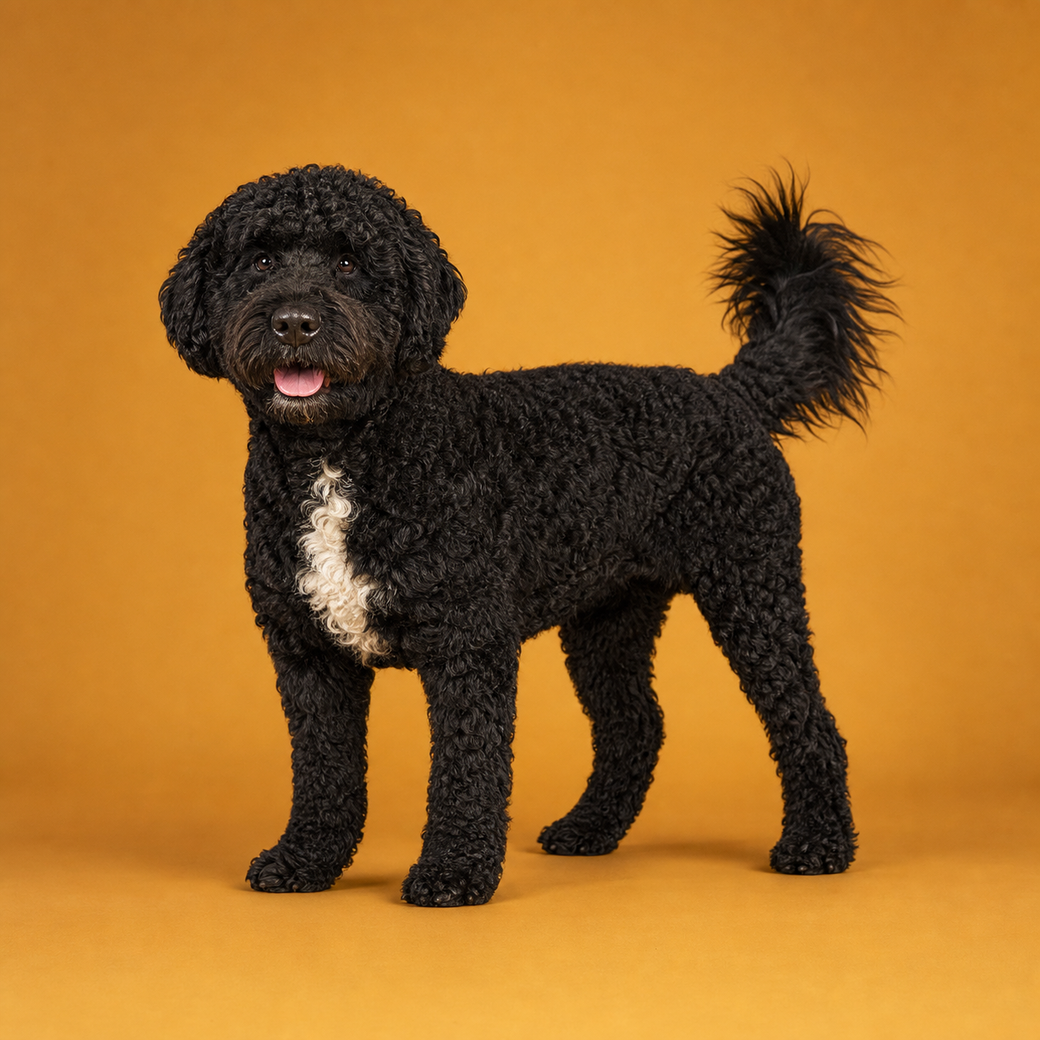
The deckhand, off duty
The old job description survives because it is almost unbelievable. Along Portugal’s Algarve coast, these dogs worked as full crew members: they herded fish into the nets, dove to retrieve broken tackle, and swam messages from boat to boat — a courier service in the era before radios, paid in fish and a spot by the stove. The AKC still calls them an all-around fisherman’s helper, which undersells the strangeness of it. The webbed feet, the rudder of a tail, the waterproof curls — none of it was styling. It was equipment.
That entire résumé now lives in your house, looking for something to do. A Portuguese Water Dog is athletic, clever, and permanently on duty — they want a task, a swim, and their people, in roughly that order, and under-occupied they will invent work you did not assign: counter patrol, sock retrieval, light landscaping. The curls shed very little, which makes them a genuine option for many allergy-sensitive homes, though no dog is guaranteed hypoallergenic and the coat asks for real grooming in exchange. This is a working partner in a companion’s body. Plan accordingly.
Keeping one happy
Grooming
The low-shedding coat grows continuously, like a poodle’s, and mats if ignored: brush a few times a week and book a clip every six to eight weeks. Two traditional trims — the lion clip and the retriever clip — are both correct. Rinse after swimming; salt and chlorine are hard on curls.
Training
Bright, biddable, and a bit of a comedian — they learn fast and test gently, so keep sessions upbeat, brief, and consistent. Water work, retrieving, agility, and nose games all suit them. Socialize early; a thinking working dog does best once the world has been thoroughly introduced.
Exercise
An hour or more of real activity daily, and water counts double — swimming is the breed’s native gear. Fetch, hikes, dock diving, a jog in cool weather. A walked-but-bored Portie is still a bored Portie; pair the mileage with jobs and puzzles to spend the brain too.
Diet
Feed a high-quality food in two measured meals, portioned to a lean, athletic frame — an active dog this driven burns real fuel, and an under-exercised one gains quietly. Treats count, especially in training-heavy months. Ask your vet about joint support for a swimmer’s shoulders as they age.

Saved from the empty nets
For centuries the breed worked Portugal’s fishing fleets, until engines and modern gear made a swimming deckhand obsolete — by the 1930s the dogs had nearly vanished. A wealthy Lisbon shipping magnate, Vasco Bensaude, began collecting the last working dogs off the boats, starting with a formidable male named Leão, and rebuilt the breed. Americans imported it in earnest in the 1970s; AKC recognition came in 1983.
Questions, answered
Are Portuguese Water Dogs hypoallergenic?
They’re one of the better choices for allergy-sensitive homes — the curly coat sheds very little — but no dog is truly 100% hypoallergenic. Spend time with one before deciding.
Do Portuguese Water Dogs shed?
Barely — the trade-off is grooming. The coat keeps growing like a poodle’s and needs regular brushing plus a clip every couple of months.
Are they good family dogs?
Very — affectionate, playful, and sturdy enough for kids, provided the household can meet their real exercise needs. A tired Portie is a wonderful housemate.
How much exercise does a Portuguese Water Dog need?
An hour or more a day, ideally with swimming or a job mixed in. This is a working water breed, not a couch spaniel.