Pug
The house comedian with a bodyguard’s past.
One night in 1572, so the story goes, Spanish assassins crept toward the camp tent of William of Orange, leader of the Dutch revolt — and a little dog named Pompey heard them first. He barked, scratched, and finally leapt onto his sleeping master’s face until the prince woke and got away. The grateful House of Orange adopted the pug as its own breed, and the dogs kept their place beside the family for generations. Four and a half centuries later, the job description is unchanged in exactly one respect: pugs remain, emphatically, bedroom dogs.
A lot of dog, small package
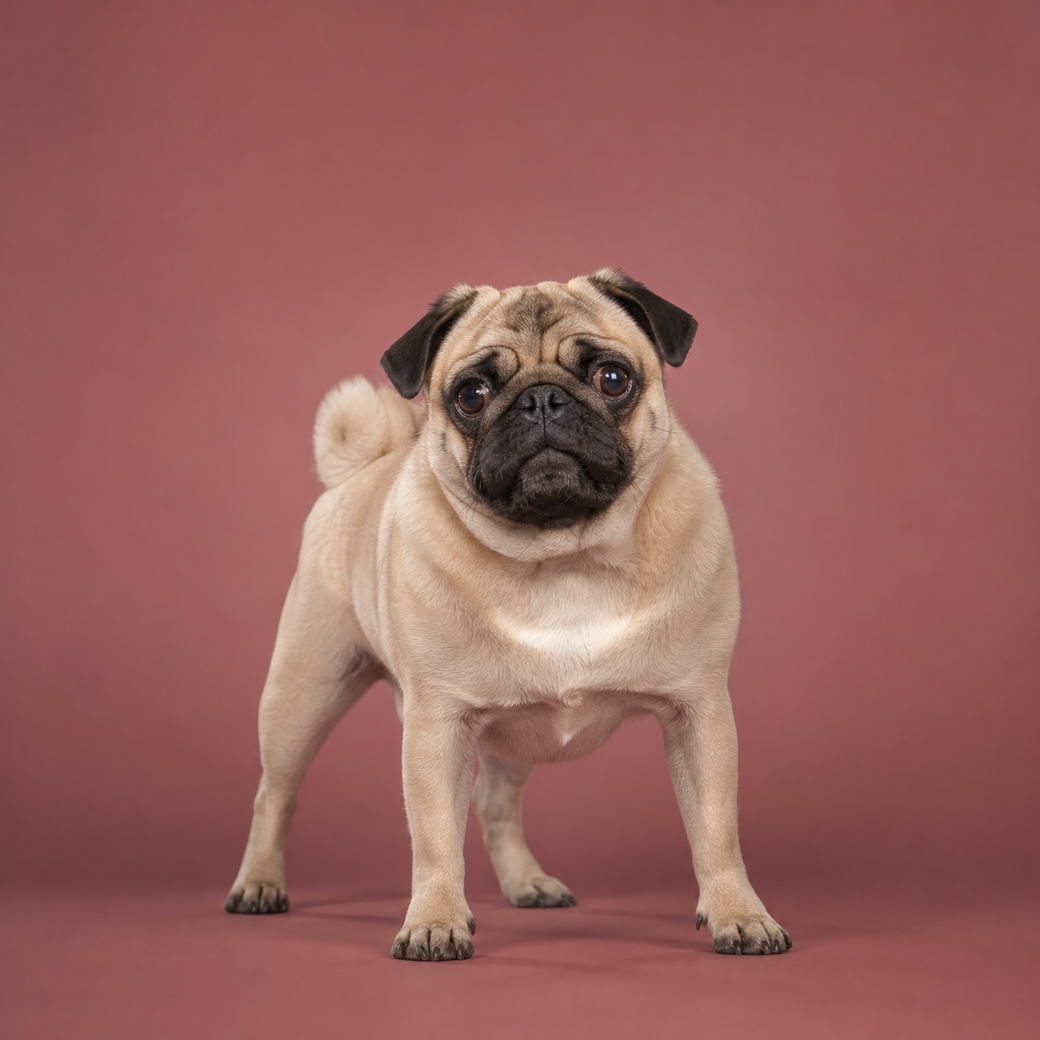
No dog has logged more hours in important laps, and the stories pile up accordingly. Joséphine Bonaparte’s pug, Fortune, may be the best documented: while Joséphine was imprisoned during the Terror, the story goes, the little dog was her courier, carrying concealed messages past the guards — and later, on her wedding night to Napoleon, Fortune bit the groom, Joséphine having declined to banish the dog from the marriage bed. Fanciers eventually gave the breed a Latin motto that doubles as a warning label: multum in parvo — a lot of dog in a little space.
Daily life with a pug is a standing comedy engagement with a few maintenance clauses. They are even-tempered, sturdy, devoted, and genuinely funny — a breed built to be near you that takes the assignment literally, trailing you from room to room. The honest bills: the short coat sheds far more than it has any right to, the snoring is orchestral, and the flat face makes heat and hard exercise real hazards — in summer, pugs are indoor dogs, full stop. Training works when framed as entertainment with snacks. In return you get a small, cheerful shadow with impeccable timing.
Keeping one happy
Grooming
Short coat, heavy shedding — a weekly session with a rubber grooming mitt keeps the hair in the brush instead of on the sofa. The facial wrinkles need regular cleaning and thorough drying to stay healthy. Nails monthly, ears checked often, and the occasional bath returns a surprisingly glossy dog.
Training
Pugs are people-pleasers with a stubborn streak: they will do nearly anything for food and nearly nothing for repetition. Keep sessions short, silly, and treat-forward. Housetraining takes patience and a schedule. Harsh corrections backfire completely — a disappointed pug simply files the whole activity under not worth it.
Exercise
Moderate and carefully timed: a couple of easy walks plus indoor play covers the day. The flat face makes overheating genuinely dangerous — exercise in the cool hours, skip summer middays entirely, and let them set the pace. Swimming is not their sport; most pugs sink with great dignity.
Diet
Pugs love food beyond reason and gain weight with alarming ease — and extra pounds make the breathing harder. Two measured meals, treats counted against the day’s total, and no free-feeding, ever. A visible waist is the goal; your vet would rather adjust portions now than treat joints later.
Out of the emperor’s court, westward
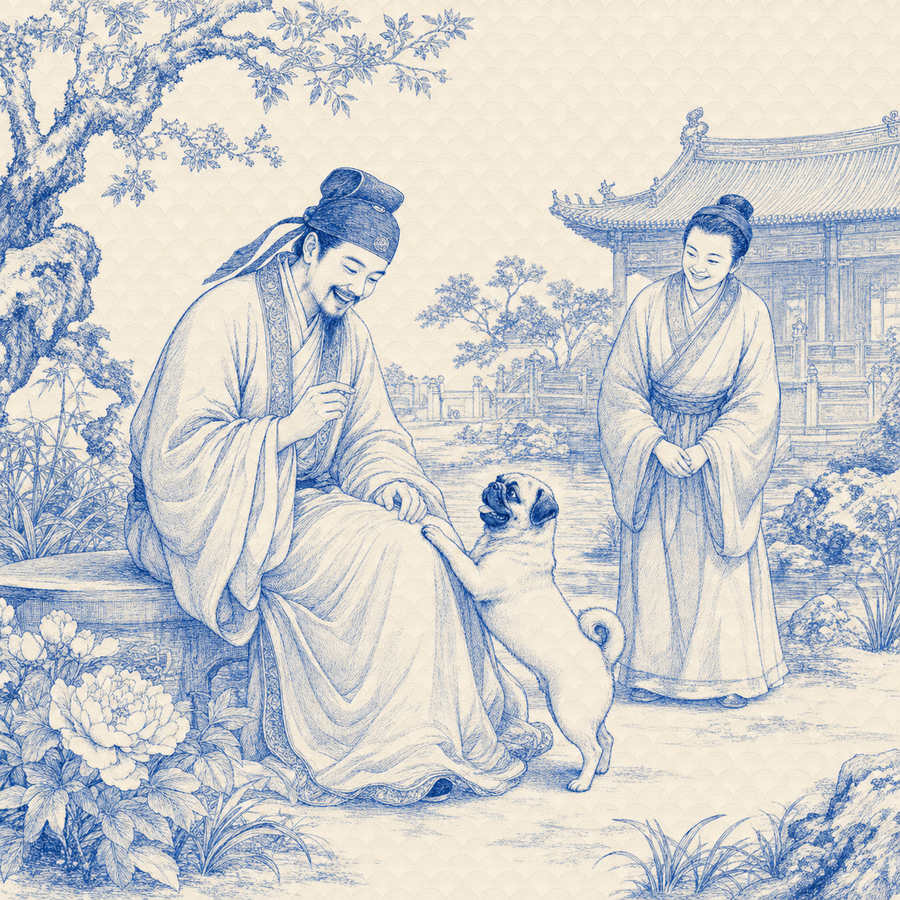
Pugs are among the oldest of all companion breeds — records place them in China at least since 400 B.C., as companions to emperors and pets of Buddhist monasteries. Traders carried them west along the sea routes in the sixteenth century, and the courts of Europe surrendered on contact. Victorian England made them a phenomenon; the AKC recognized the pug in 1885, among the first breeds it ever registered.
Questions, answered
Do pugs shed a lot?
Yes — surprisingly heavily for a short coat, and year-round. A weekly brushing habit and a good vacuum are part of the deal.
Can pugs handle hot weather?
No — the flat face makes them prone to overheating, and hot, humid days are genuinely risky. Air conditioning, shade, and early-morning walks are essentials, not luxuries.
Are pugs good apartment dogs?
One of the best: small, low-energy, more snorer than barker, and happiest wherever their people are.
Do pugs bark much?
Not especially — expect snorts, snuffles, and world-class snoring instead. Most pugs announce visitors briefly and then try to charm them.