Rhodesian Ridgeback
Formerly a lion's problem.
The Rhodesian Ridgeback exists partly because a lion hunter borrowed the minister's dogs. In the 1870s, the Reverend Charles Helm left two rough-coated greyhound-type females, Powder and Lorna, at his mission station in southern Africa while he traveled. Cornelius van Rooyen, a celebrated big-game hunter, bred them into his pack — alongside dogs descended from the ridge-backed hunting dogs of the Khoikhoi people — and spent decades refining the result: a hound that could find a lion, hold it at bay until the rifle arrived, and live to do it again. The ridge down the spine became the signature of the whole experiment.
Courage, quietly carried
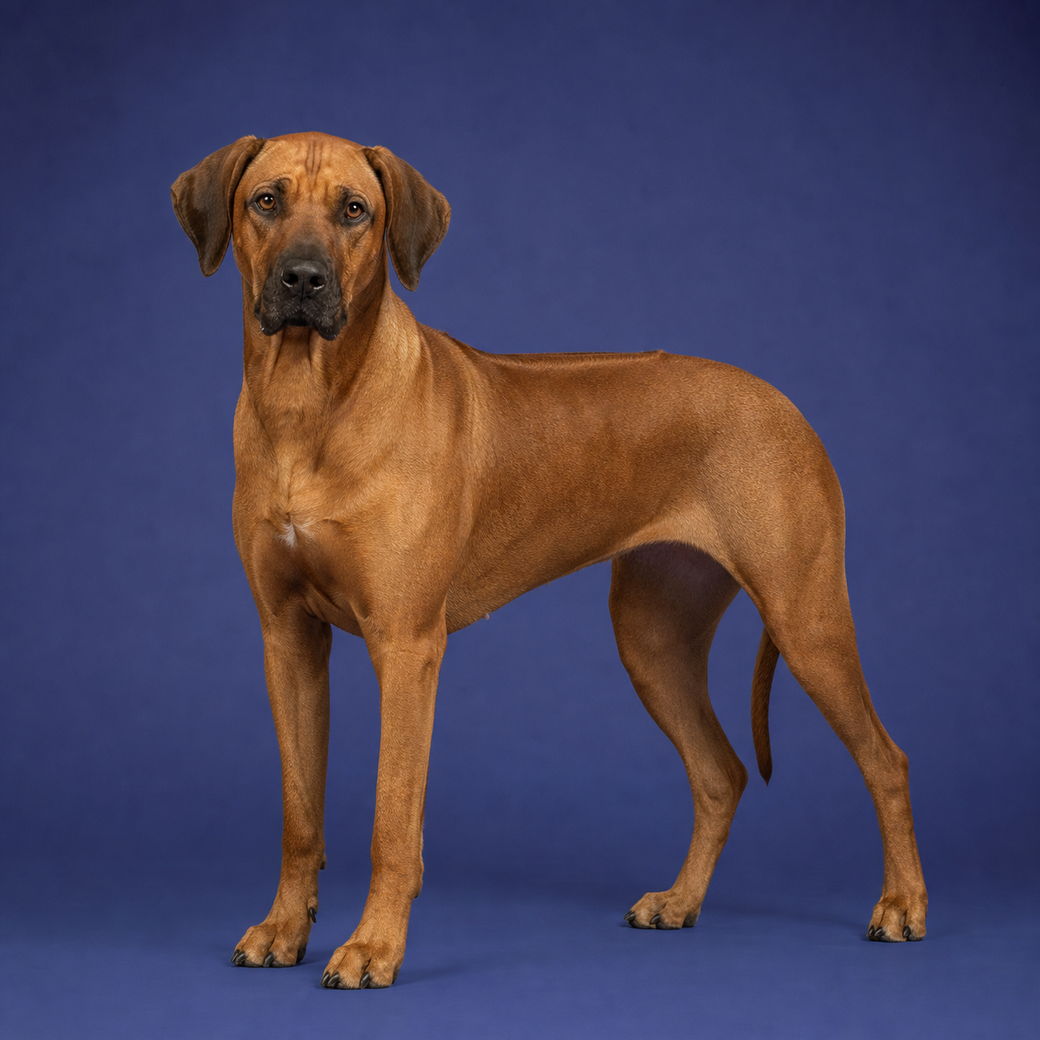
Understand what the job actually was, because it explains the dog. Ridgebacks never fought lions — they worked them the way a matador works a bull, darting, feinting, holding the cat's furious attention from just out of reach. That called for speed, judgment, and a very cool head, and all three still come standard. The ridge itself — a strip of hair growing backward along the spine, crowned with two whorls — is the breed's badge. Hollywood noticed early: Errol Flynn raised Ridgebacks on his ranch in the 1930s, the breed's first American breeder.
The modern Ridgeback has traded the veld for the sofa and considers it a fair exchange. They are quiet, clean, low-odor, and dignified — an easy dog to live with, physically — while remaining athletes with a prey drive that never got the retirement memo. Cats and squirrels are a management question; so is the counter, because Ridgebacks are food thieves of legend. With their family they are affectionate and faintly comic; with strangers, politely reserved. They respect owners who are consistent and see straight through everyone else.
Keeping one happy
Grooming
The easiest coat in this business: short, sleek, and low-odor, needing a weekly pass with a mitt and the occasional bath. The famous ridge requires no maintenance whatsoever — it is a birthright, not a hairstyle. Nails, ears, and teeth on the standard schedule complete the entire program.
Training
Intelligent and independent — a hound that weighs your requests against current market conditions. Train early, keep it positive and food-based (motivation is never the issue), and be perfectly consistent; they exploit loopholes like tax attorneys. Recall around prey is a lifelong management project, not a finished skill.
Exercise
A daily hour of real exercise — running, hiking, sprint sessions in a fenced space — suits this athlete, and they will happily do more. Off-leash in open country is a gamble the prey drive usually wins. Exercised properly, they mature into champion loungers with excellent sofa judgment.
Diet
Measured meals for a lean, hard-muscled build — and genuine counter security, because a Ridgeback treats unattended food as a rescue mission. Deep-chested breeds carry bloat risk: calm mealtimes and rest around eating. Keep them trim; the athleticism and the joints both depend on it.
From the veld to the sofa
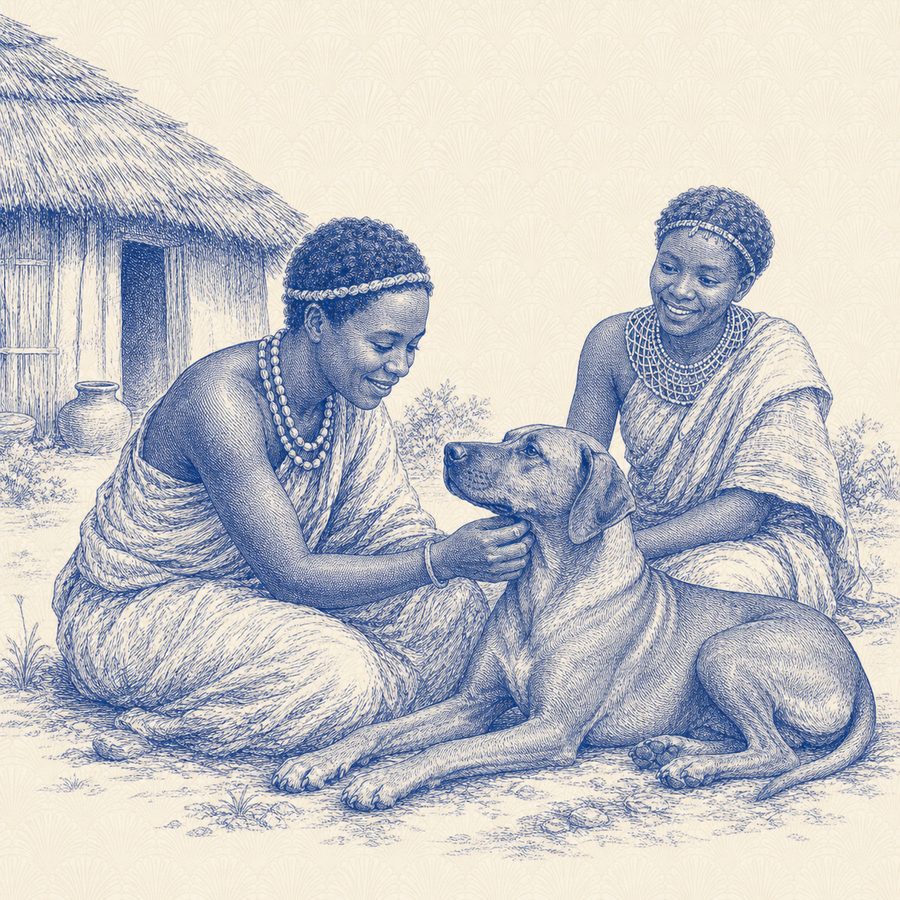
Dutch and other European settlers in southern Africa crossed their farm dogs with the ridged hunting dogs of the Khoikhoi, producing frontier hounds prized on big-game hunts in old Rhodesia. In 1922, F.R. Barnes drafted the first breed standard in Bulawayo — borrowing from the Dalmatian standard — and the AKC recognized the Rhodesian Ridgeback in 1955.
Questions, answered
Did Rhodesian Ridgebacks really kill lions?
No — they tracked lions and held them at bay for hunters, using speed and agility rather than combat. The nickname “lion dog” is about nerve, not violence.
Do Rhodesian Ridgebacks shed?
Lightly and year-round — among the lowest-maintenance coats going, though not hypoallergenic.
Are Ridgebacks good family dogs?
Devoted, calm, and good with their own children, if large and boisterous when young. Reserve with strangers is breed-typical.
Can a Ridgeback be off leash?
Rarely safely in open country — the prey drive outvotes the recall. Fenced running space is the honest answer.