Rottweiler
Trusted with the cattle, the cart, and the cash.
For centuries, cattle dealers in the German market town of Rottweil finished every sale with the same security problem: dark roads home and a purse full of money. The solution had four legs and had already worked a full day. Drovers tied the purse around the neck of the dog that had just driven their herd to market — the Metzgerhund, the butcher’s dog of Rottweil — on the sound theory that nobody was going to reach for it. Dog as drover, dog as escort, dog as vault: the whole job description, then and now, was trust.
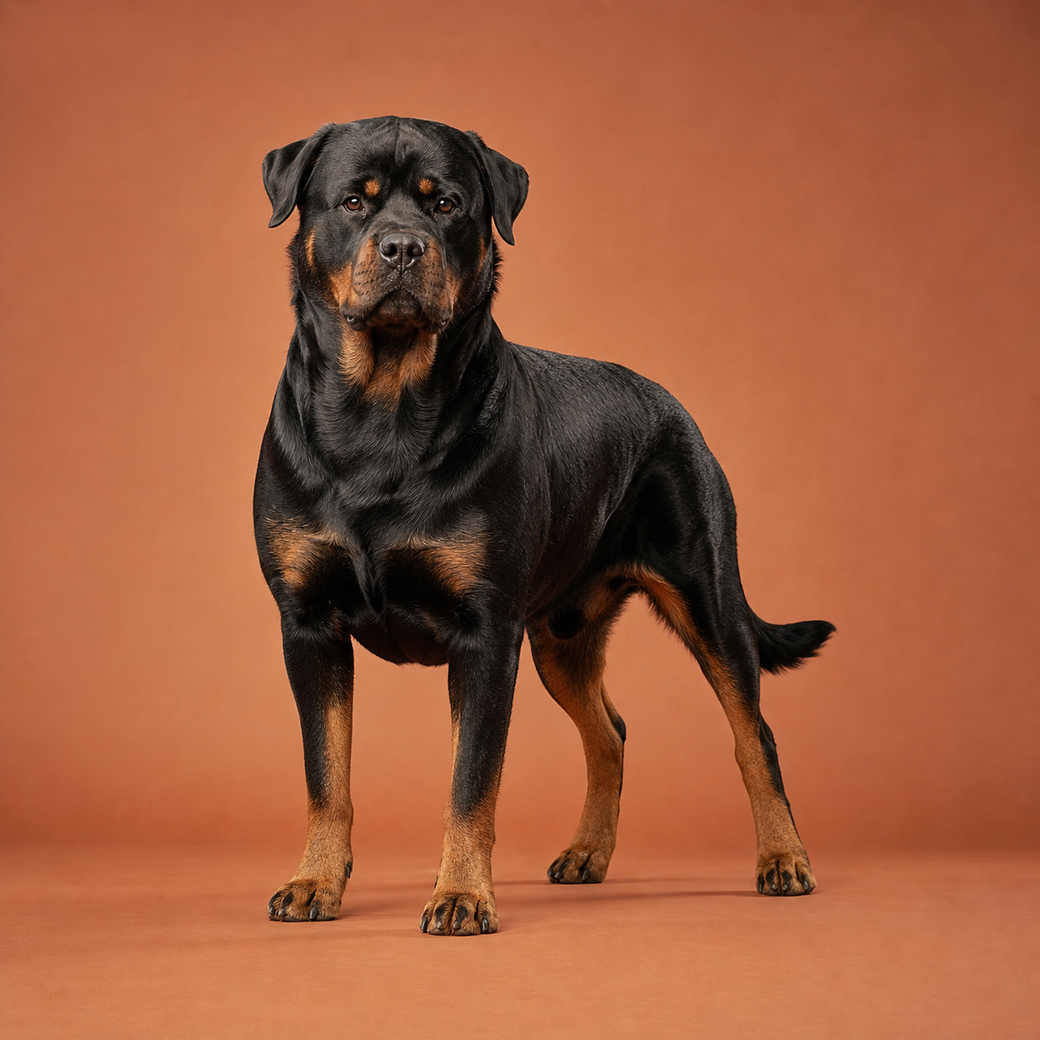
Earning the trust, still
The breed nearly did not survive its own obsolescence. When railroads took over the livestock trade in the nineteenth century, the butcher’s dog was suddenly unemployed — by 1882, a German dog show could scare up exactly one Rottweiler. What saved them was a second career: police work. Early twentieth-century German forces recruited the breed alongside shepherds and Dobermans, and the old calm, capable steadiness turned out to transfer beautifully. America eventually noticed too, and then some — by the mid-1990s the Rottweiler was the second most popular dog in the country.
A well-raised Rottweiler at home is a surprise to anyone who only knows the reputation: a calm, watchful, frankly goofy companion that leans a hundred pounds of devotion against your legs and rumbles with contentment. They are reserved with strangers by design — the guardian’s wait-and-see instinct comes standard — which is exactly why the breed is non-negotiable work: early socialization, consistent training, real daily engagement, for life. Do the work and few family dogs anywhere are steadier. Skip it and you simply have too much dog. They deserve the version of you that shows up.
Keeping one happy
Grooming
A short double coat with honest, moderate shedding — expect heavier drifts in spring and fall. A weekly going-over with a rubber mitt handles most of it, baths as needed. The easy coat leaves time for what matters more: nails, teeth, and a weekly hands-on check of everything.
Training
Start early, stay consistent, keep it positive — a Rottweiler works willingly for a person they respect, and respect is built, never assumed. Socialization is the single best investment you will make in this breed. They excel at obedience, tracking, herding, and carting; a working Rottweiler is a proud one.
Exercise
A solid hour a day: brisk walks, hiking, swimming, structured play. Better yet, give the muscles employment — carting, herding trials, weight-pull — because this working breed finds idleness suspicious. Go easy on young joints, though; let the skeleton finish growing before the serious athletics begin.
Diet
Measured meals twice a day, kept honest — Rottweilers gain weight easily, and extra pounds punish the hips, elbows, and heart of a breed that already gives you too few years. Grow puppies slowly on large-breed food. Calm mealtimes, no hard exercise right after; deep chests carry bloat risk.
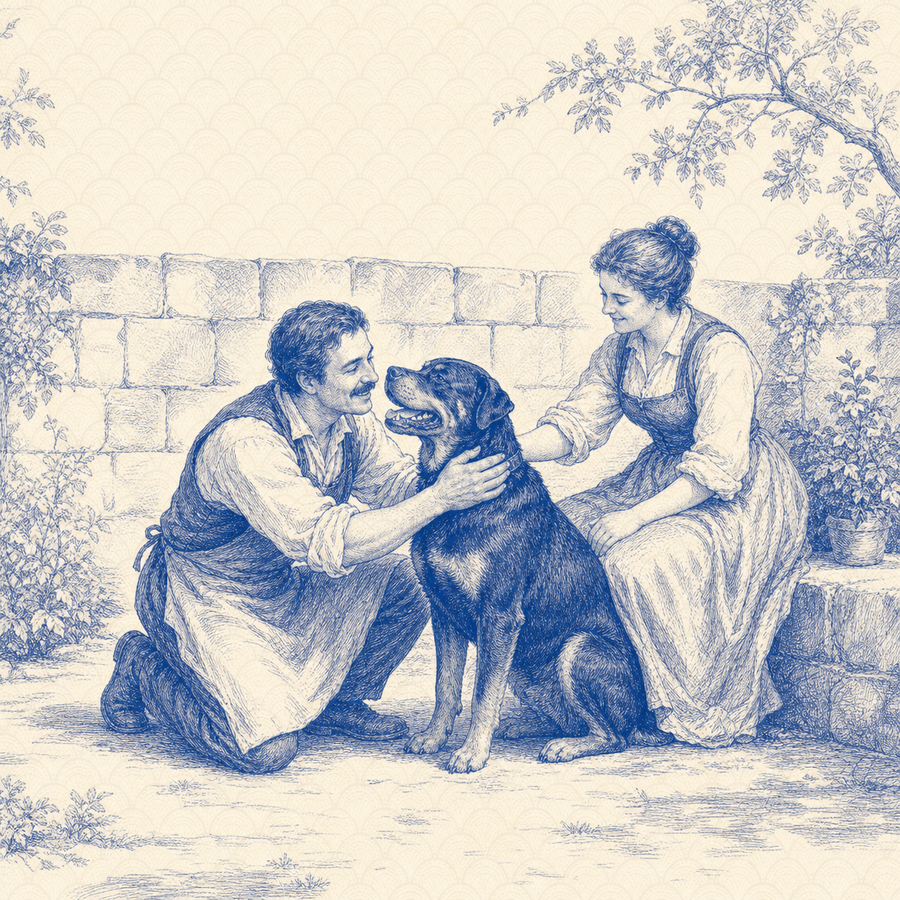
Rome’s drover dog finds new work
The line runs back some two thousand years, to the mastiff-type drover dogs that crossed the Alps with the Roman legions, keeping the army’s cattle moving and guarded. Some stayed behind in southern Germany, where a livestock town lent the breed its name and centuries of steady butcher’s work. The AKC recognized the Rottweiler in 1931; today’s dogs serve in search-and-rescue, therapy work, and — most often — on the family sofa.
Questions, answered
Are Rottweilers good family dogs?
With early socialization, consistent training, and real involvement in family life, yes — devoted, patient, and gentle with their own people. They are a commitment, not a starter dog.
Are Rottweilers aggressive?
The breed standard calls for calm confidence, not aggression. Reserve toward strangers is normal; a well-bred, well-raised Rottweiler is steady. Poor breeding and neglect are where trouble starts.
Do Rottweilers shed?
Moderately year-round, more in spring and fall. A weekly brushing keeps it manageable.
How long do Rottweilers live?
Typically 9–10 years. Keeping them lean and well-exercised protects the joints and heart — every healthy year counts double with this breed.