Saint Bernard
The barrel is a myth. The rescues were real.
In a glass case in Bern’s Natural History Museum stands a dog who has been famous for two hundred years. Barry lived at the hospice on the Great St. Bernard Pass, high in the Alps between Switzerland and Italy, from 1800 to 1814 — and in those years he is credited with finding and saving some forty travelers lost in the snow. When he died, Switzerland could not bear to let him go, so he was preserved, and remounted, and visited ever since. Two centuries on, the myths around Barry have been gently corrected. The forty rescues have not.
A very large gentleness
The little brandy barrel is the part everyone knows, and it never existed. The image traces to Edwin Landseer, an English painter who in 1820 — at eighteen, before he had ever seen the Alps — painted two Saint Bernards reviving a stranded traveler, one dog wearing a small cask on its collar. The public adored it, and the myth outran every correction. The monks themselves have long denied that any dog carried spirits, and brandy is the wrong treatment for hypothermia anyway. No matter. The cask is on the breed’s souvenirs forever, a painter’s flourish made canon.
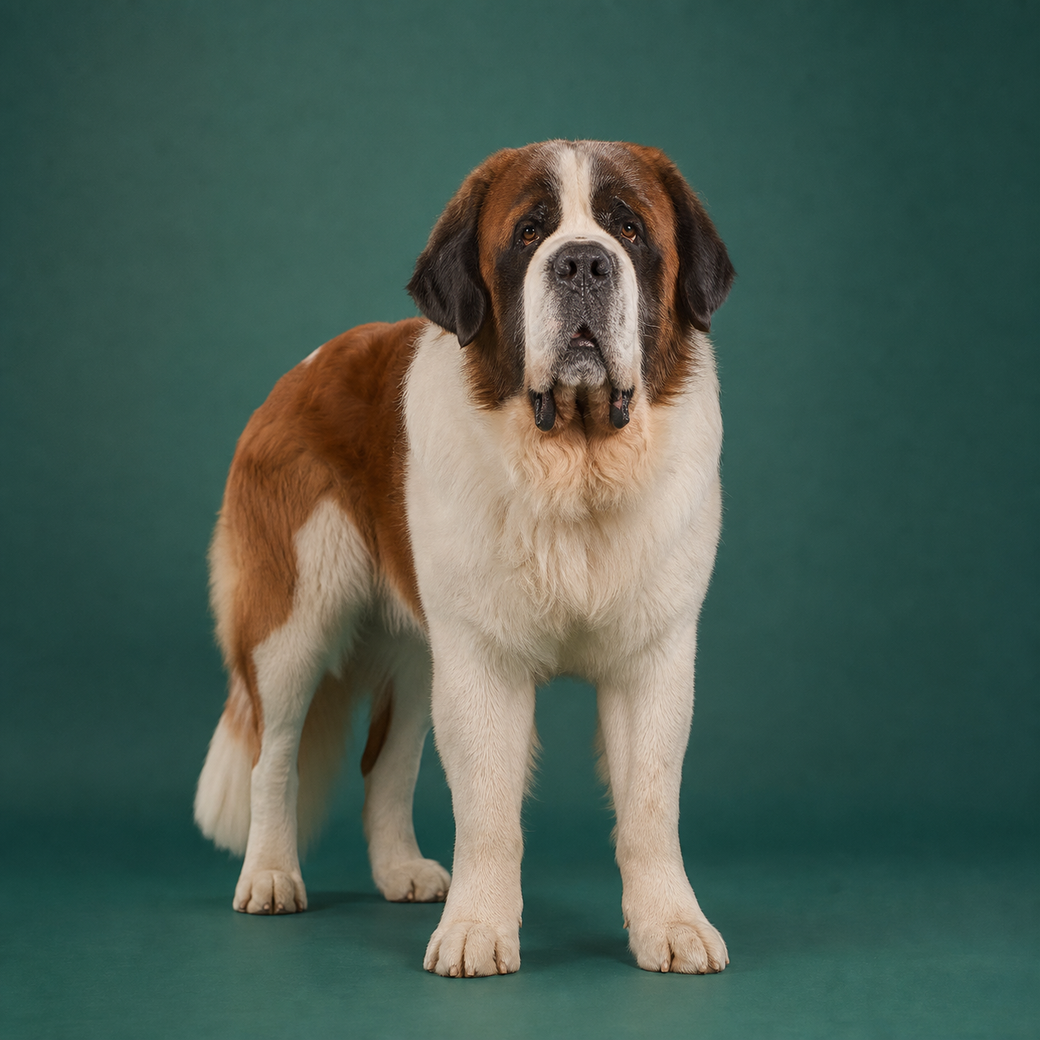
Living with a Saint Bernard is a lesson in scale. They are calm, patient, and famously gentle with children — a watchful giant whose ambitions run to lying wherever the family is, plus a daily amble and a patch of cool floor. The honest costs: drool, in quantities that redecorate; a dense coat that lets go heavily twice a year; and a giant’s shorter span, eight to ten years you will wish were twenty. They occupy the whole sofa and a commensurate share of your heart. Nobody who has loved one regrets the square footage.
Keeping one happy
Grooming
Brush the dense coat two or three times a week, daily during the spring and fall blows when the undercoat lets go in earnest. Keep a drool towel at every door and learn to deploy it reflexively. Ears cleaned regularly, nails monthly — and build the grooming habit while they are still liftable.
Training
An eager, soft-natured student — the essential curriculum is manners, taught early, because everything a hundred-and-fifty-pound dog does is emphatic. Leash skills before six months are the best investment your shoulders will ever make. Keep sessions gentle and consistent; Saints wilt under harshness and bloom under praise.
Exercise
Moderate and unhurried: a good daily walk or two and some play, and they are content — this is a strolling companion, not a running partner. Take heat seriously; that Alpine coat makes summer genuinely risky, so exercise early and late. Limit stairs and jumping while puppy joints grow.
Diet
Large-breed food in measured meals, and grow puppies slowly — a Saint should take a leisurely two years to reach full size, because fast growth punishes the joints. As deep-chested giants they carry real bloat risk: calm mealtimes, no vigorous exercise after eating, and learn the warning signs early.
A thousand years above the snow line
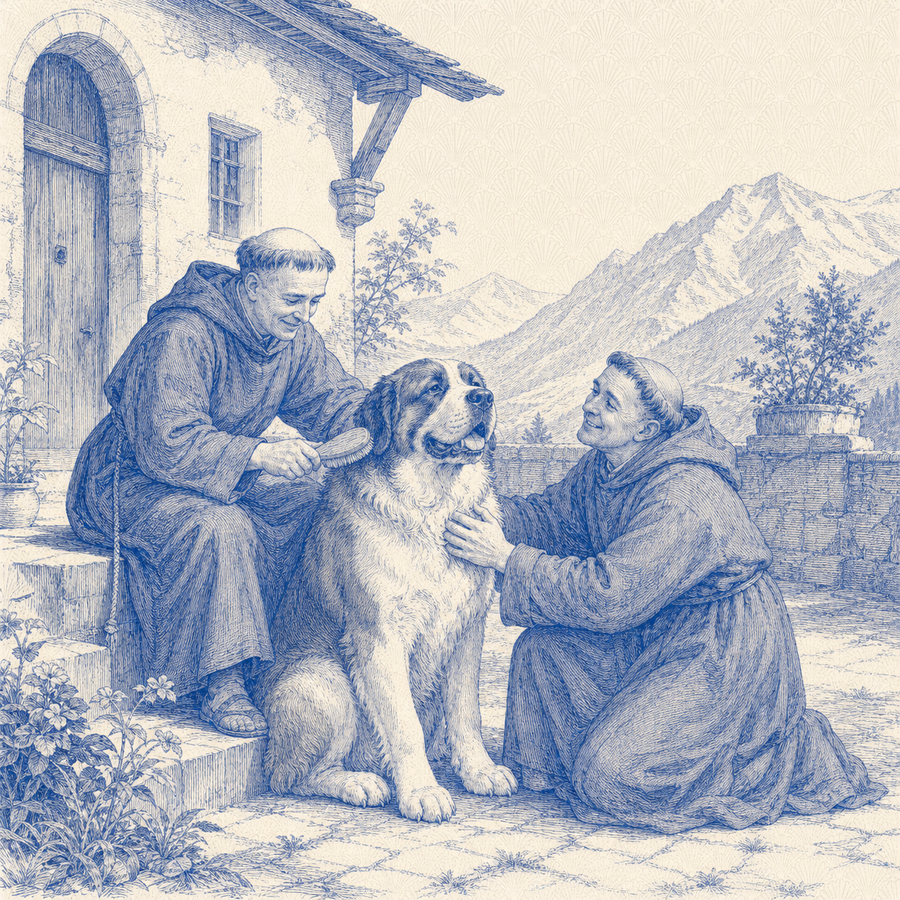
Nearly a thousand years ago, monks founded a hospice for travelers on a treacherous Alpine pass, and in the 1660s they acquired their first dogs — as companions and watchdogs who turned out to possess a genius for finding people in snow. Generations of hospice dogs worked the drifts alongside the monks well into the modern era. The AKC recognized the Saint Bernard in 1885, among its earliest breeds.
Questions, answered
Do Saint Bernards drool a lot?
Yes — magnificently and unapologetically. Keep towels stationed around the house; there is no training it away.
Are Saint Bernards good with kids?
Famously — patient, gentle, and tolerant. The main supervision issue is sheer size around toddlers, not temperament.
How big do Saint Bernards get?
Roughly 120 to 180 pounds and up to about 30 inches at the shoulder. Plan the car, the sofa, and the food budget accordingly.
How long do Saint Bernards live?
Typically 8–10 years, as with most giants. Lean weight, slow puppy growth, and joint care help you get every one of them.