Samoyed
Part sled dog, part space heater, all smile.
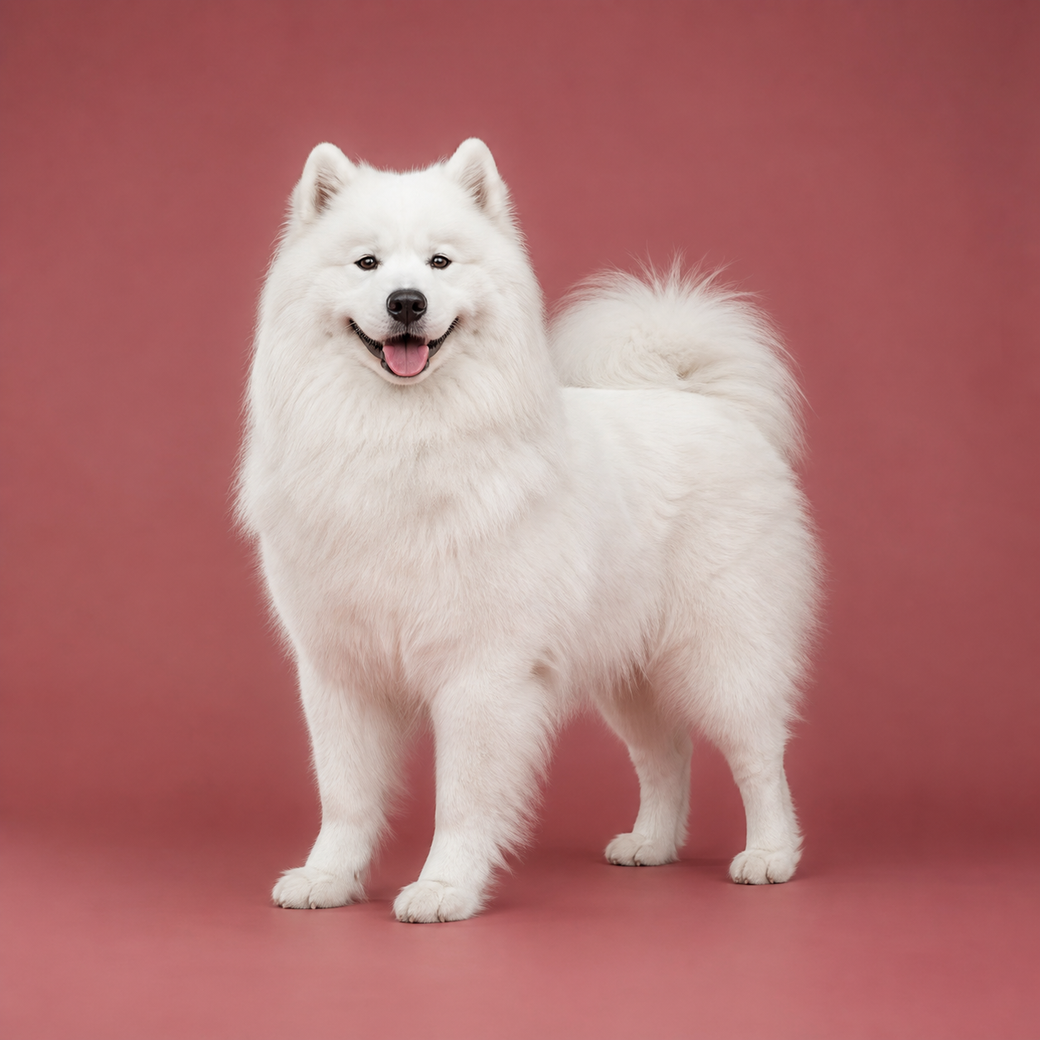
Start with the smile, because the smile has a job. The upturned corners of a Samoyed’s mouth keep drool from gathering — and in the Siberian Arctic, where this breed worked for thousands of years, gathered drool freezes into icicles. So the famous “Sammy smile” began as cold-weather engineering, standard equipment on a dog built for the coldest inhabited places on earth. But stand in a doorway while a Samoyed comes to greet you, all white cloud and black-rimmed grin, and the engineering explanation collapses. No dog looks this pleased by accident. The history explains that part too.
Bred to stay close
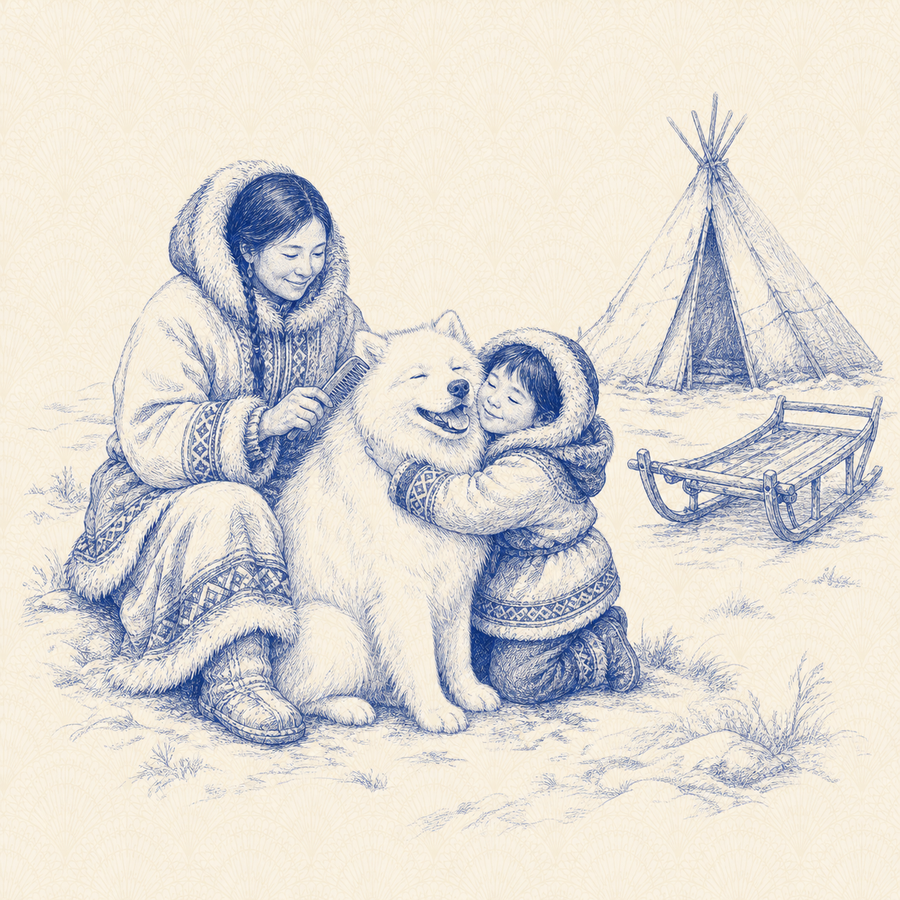
The Samoyede people, nomadic reindeer herders of northwestern Siberia, lived closer to their dogs than perhaps any culture ever has. The dogs herded the reindeer, hauled the sledges, and guarded the camp — parents would leave them to watch the children. And at night the dogs came into the tents and lay against their people, working the last shift of the day as warmth itself. Millennia of that arrangement produced something rare: a hard-working dog with a companion’s soul, one that regards the space beside you as ancestral territory.
All of it persists. A Samoyed today is gentle, sociable, and constitutionally incapable of being a backyard dog — this breed was shaped sleeping against its people, and solitude genuinely baffles them. They are clever, mildly mischievous, and vocal about their opinions, with a special talent for winning over children. The coat is glorious and relentless: the white cloud sheds year-round and blows out spectacularly twice a year, the breed’s one great tax. Pay it, give them company and cold-morning adventures, and you get the rare working dog whose actual specialty is you.
Keeping one happy
Grooming
Commit to the brush: two or three thorough sessions a week, down to the skin, and daily work when the undercoat blows in spring and fall. The white coat is surprisingly self-cleaning — dried mud simply falls away — so baths stay occasional. Never shave a double coat; it insulates both ways.
Training
Smart, willing, and just independent enough to keep you honest — Samoyeds learn quickly and see little point in repeating themselves. Keep sessions short, positive, and varied. Work on recall early and forever. Do not be surprised when the herding instinct surfaces as gentle traffic direction of small children.
Exercise
An hour or more a day, and they are game for nearly anything: hiking, cool-weather jogging, pulling a sled or cart, wrestling with dogs they like. Cold mornings double the enthusiasm. Mental work counts just as much — a Samoyed with nothing to do will file a complaint, audibly.
Diet
An efficient Arctic metabolism means Samoyeds often eat less than their size suggests. Two measured meals a day, treats budgeted, and weight watched closely — extra pounds hide easily under all that coat. In warm climates, feed during the cool hours and keep water always within reach; the coat works overtime.
The dogs the explorers chose
Polar exploration made the breed’s reputation: Fridtjof Nansen provisioned his 1890s Farthest North expedition with dogs bought straight from the herding camps, and Carsten Borchgrevink’s teams went south in 1898 as the first dogs ever to work in Antarctica. English fanciers built the modern breed from expedition veterans and imports, and royalty took notice. The AKC registered its first Samoyed, a dog named Moustan, in 1906.
Questions, answered
Do Samoyeds shed a lot?
Enormously — steady shedding year-round plus two dramatic seasonal blows. Committed brushing is part of the lifestyle, and no, they are not hypoallergenic.
Can Samoyeds live in warm climates?
Yes, with care — shade, water, air conditioning, and exercise in the cool hours. The double coat insulates against heat too, so never shave it.
Are Samoyeds good with kids?
One of the breed’s oldest jobs — they were trusted to watch children in the Arctic and remain gentle, patient playmates today.
Do Samoyeds bark a lot?
They are talkative — barks, woos, and running commentary, especially when bored or excited. Exercise and company keep the volume reasonable.