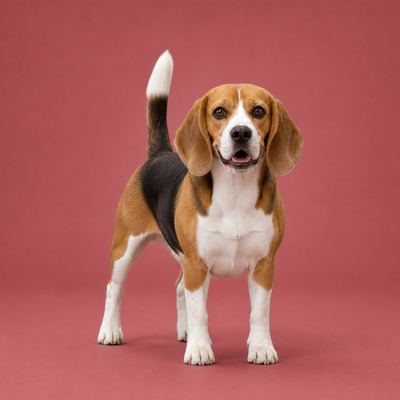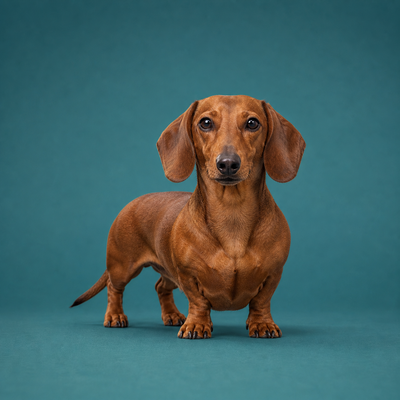
Scottish Terrier
Small, bearded, constitutionally unpersuadable.
On September 23, 1944, Franklin Roosevelt stood before the Teamsters and answered the strangest attack of his career: a rumor that he had sent a Navy destroyer to fetch his Scottish Terrier from the Aleutian Islands, at vast taxpayer expense. “These Republican leaders have not been content with attacks on me, or my wife, or on my sons,” he said, mock-wounded. “No, not content with that, they now include my little dog, Fala.” The room roared, and the campaign turned. Fala — who had his own secretary to answer his fan mail — took the fame calmly. Scotties take everything calmly.
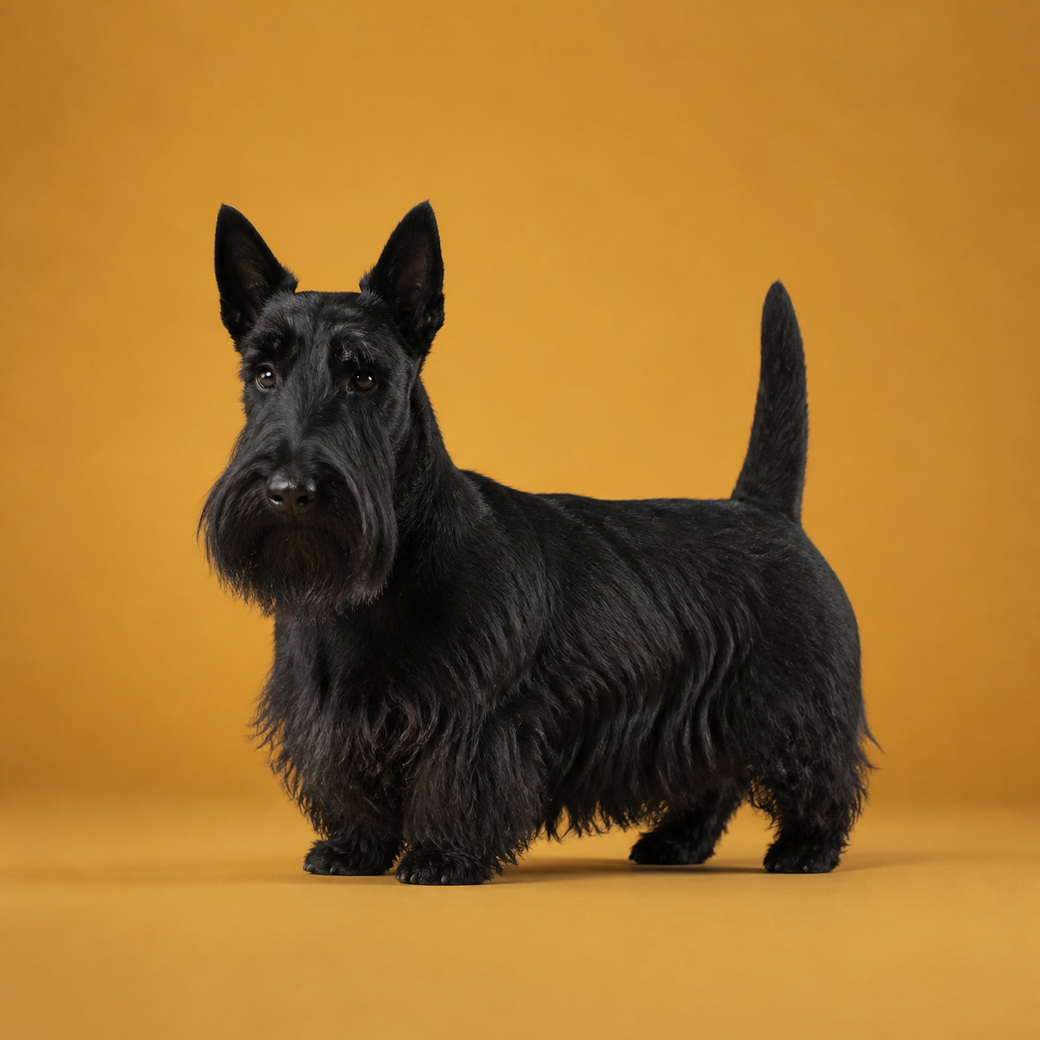
Dignity, strictly non-negotiable
Fala outlived his president by seven years, and Washington never let him go: at the FDR Memorial he sits in bronze at Roosevelt’s side, the only presidential pet honored with a statue at a presidential memorial. The breed collects this sort of permanence. A Scottie has ridden the Monopoly board since the early 1950s, when Hasbro’s predecessors added the token to the original lineup. And in the 1930s — the breed’s golden age in America — Humphrey Bogart, Bette Davis, and Dorothy Parker all kept one, back when that silhouette was simply what a dog looked like.
Living with a Scottie is a study in sovereignty. They love their people deeply and demonstratively — by their standards, which run to sitting nearby with an air of approval rather than adoration on demand. Bred to face fox and badger underground, alone, they make their own decisions and treat yours as advisory; strangers are audited, other dogs are not automatically colleagues, and the garden is at standing risk of excavation. None of this is defiance. It is policy. For people who admire character over compliance, there is no better small dog.
Keeping one happy
Grooming
The hard, wiry jacket sheds very little but needs real upkeep: brush weekly, and plan on hand-stripping or clipping every couple of months — stripping keeps the coat harsh and weatherproof, clipping softens it. Keep the beard rinsed after meals and the furnishings combed. The eyebrows, mercifully, maintain themselves.
Training
Recalibrate before you start: a Scottie learns quickly and complies selectively, and drilling insults them. Keep sessions short, treat-funded, and framed as mutual projects; harsh corrections buy you nothing but a grudge. Socialize early, and accept that recall near a squirrel is a hope, not a plan.
Exercise
Moderate and purposeful: a couple of brisk daily walks plus patrol time in a fenced yard suits them well. They were bred to dig, and will — give the instinct a legal corner or lose a flowerbed. Swimming is not their sport; that build was engineered for tunnels, not water.
Diet
Two measured meals a day, portioned honestly — a low-slung dog shows extra weight fast, and the joints and back pay for it. Treats count, especially during training negotiations. Scotties as a breed carry some cancer risk, so keep the vet visits regular and the body lean.
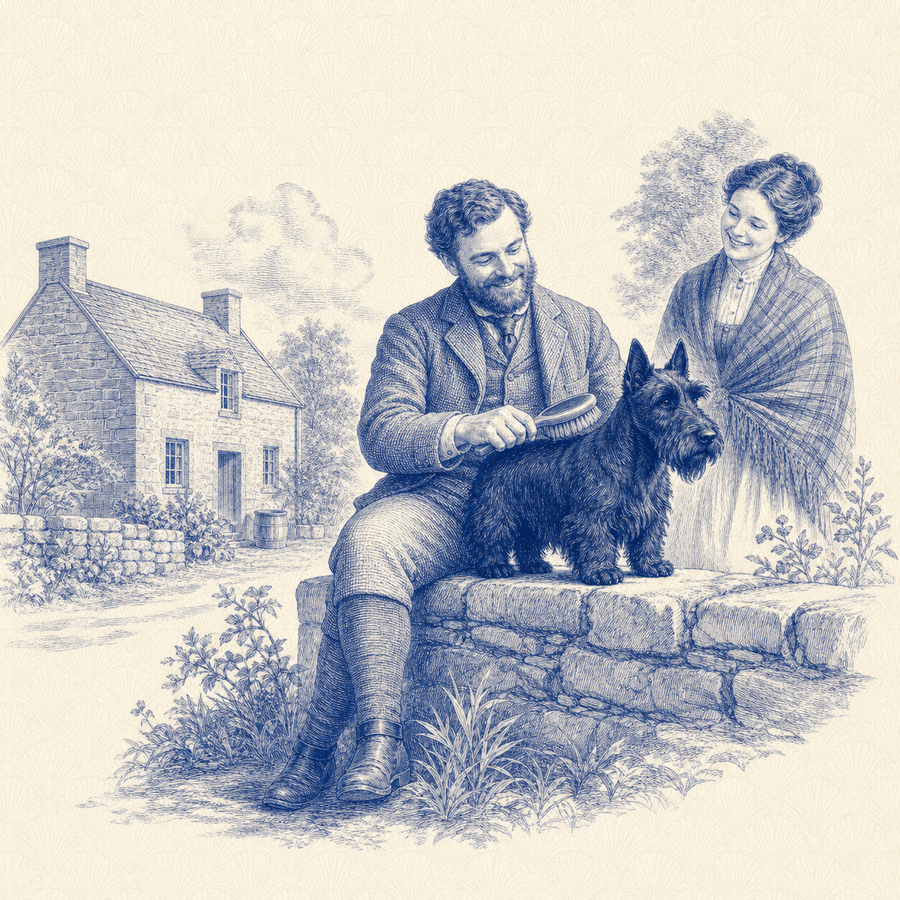
Dug in since the thirteenth century
Terriers worked the Scottish Highlands from the thirteenth century, going to ground after fox, badger, and vermin; the strain around Aberdeen became the foundation of today’s breed, nicknamed “the Diehard” for its persistence. John Naylor brought the dogs to America, and in 1885 his Prince Charlie became the first Scottish Terrier in the AKC registry. The dignity arrived intact.
Questions, answered
Do Scottish Terriers shed?
Very little — the wiry double coat holds its hair. The trade is grooming: regular hand-stripping or clipping keeps it healthy and sharp.
Are Scotties hypoallergenic?
Often a good fit for allergy-sensitive homes thanks to the low-shedding coat, though no dog is truly 100% hypoallergenic.
Are Scottish Terriers good with kids?
Better with respectful older children. Scotties have firm boundaries and little patience for rough handling — supervise the little ones.
Are Scotties hard to train?
They are independent, not slow — they learn fast and comply thoughtfully. Short, positive, food-driven sessions work; repetition and pressure do not.