Sheepadoodle
A panda that herds.
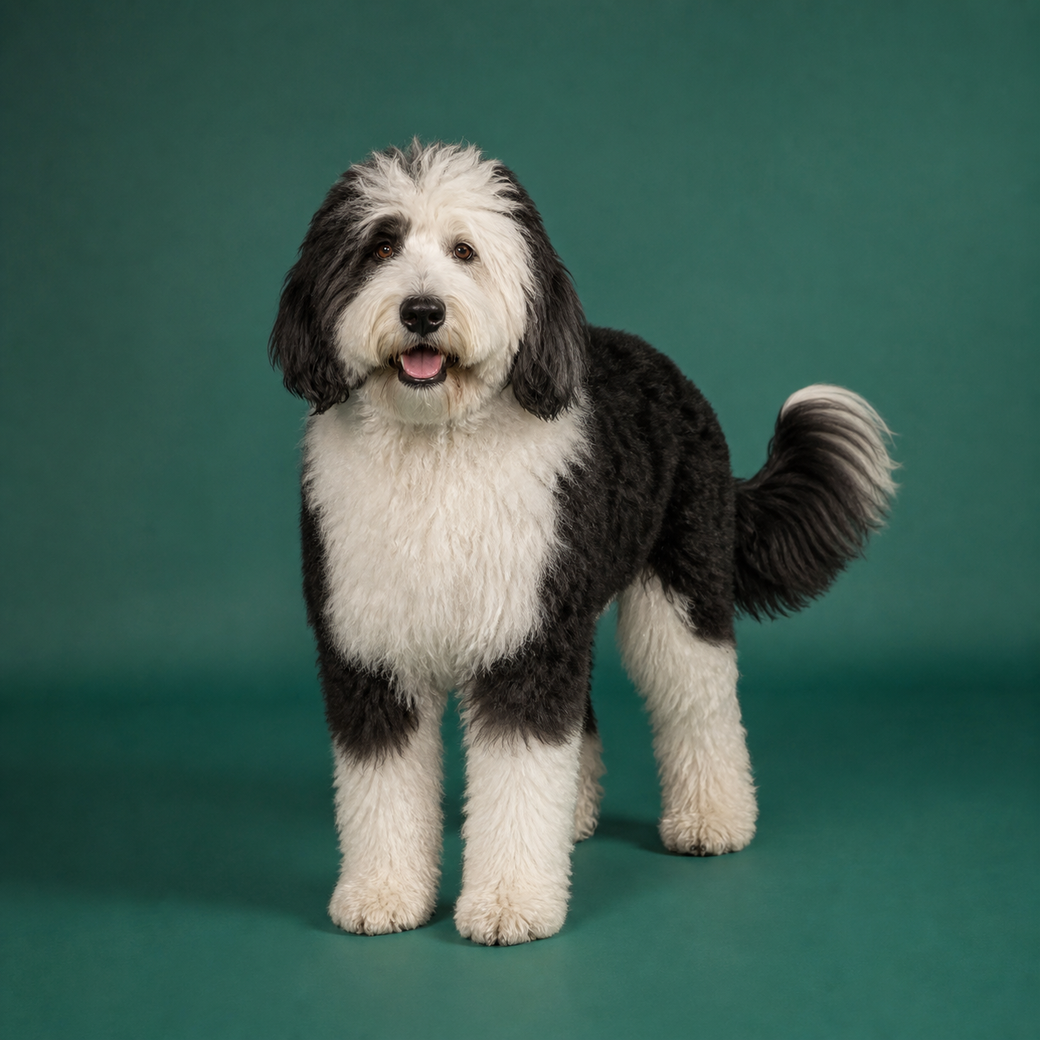
Cross an Old English Sheepdog with a Poodle and you get the Sheepadoodle: a big, soft, black-and-white cloud that photographs like a cartoon and behaves like a shadow. Doodle lore holds that the US Army bred the first ones in the 1960s as military dogs — a story repeated across the internet and sourced, as far as anyone can find, nowhere at all, so treat it as folklore. What is documented is the modern version, riding the doodle wave of the 2000s into therapy work, family homes, and an enormous number of phone cameras. The panda coloring does most of the marketing itself.
Gentle giant, herding brain
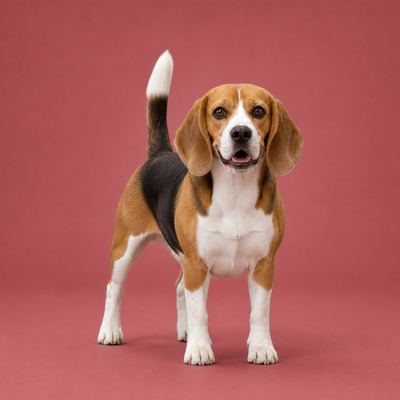
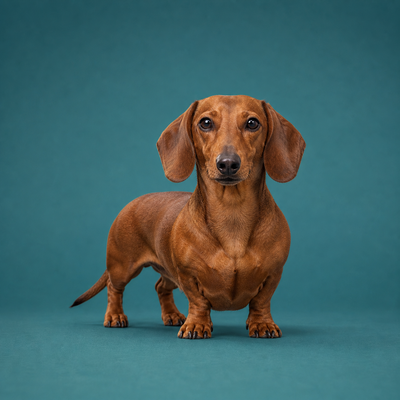
Meet the parents, because a Sheepadoodle is a large dog assembled from two smart, work-bred ones. The Old English Sheepdog brings size, that shaggy coat, and a mellow, family-guarding temperament; the Poodle brings athletic intelligence and a lower-shedding coat. The blend is usually an affectionate, biddable, people-focused dog — but with a genuine herding brain that needs a job, and a size that ranges from a 25-pound mini to an 80-pound standard depending on the Poodle used. As with every cross, no standard holds them to a type: meet the actual dog.
That herding inheritance is the part new owners underestimate. A Sheepadoodle wants work, company, and something to organize — and if you don’t supply it, they may start gently herding the children, the cat, or your ankles. They bond intensely and dislike being left, so this is a poor fit for a household that is out all day. Give one real exercise, a puzzle or a task, and the family it so clearly wants to belong to, and you get a calm, funny, devoted companion under all that photogenic fur. The coat, be warned, is a commitment.
Keeping one happy
Grooming
The thick, wavy coat is real work: brush several times a week to the skin — mats form underneath a deceptively fine surface — and plan on professional grooming every six to eight weeks. Shedding is usually low, which is the point, but low-shedding coats keep growing and demand upkeep. Keep the eyes clear of the shaggy fringe.
Training
Bright and eager, which makes training a pleasure, but the herding drive needs direction. Start early, keep it positive, and give the brain real jobs — obedience, agility, trick work, scent games. Redirect the instinct to herd people before it becomes a habit. A Sheepadoodle with a task is a partner; one without becomes a large, bored freelancer.
Exercise
Substantial: this is a working cross, not a decorative one. Plan on an hour or more a day of real activity plus mental work, scaled up for the standard-size dogs. They love hikes, fetch, and games with rules. A well-exercised Sheepadoodle is a mellow housemate; an under-exercised one reorganizes the household on its own initiative.
Diet
Feed a balanced food matched to size and life stage, and keep large, fast-growing pups lean to protect developing joints. Portion by the dog, not the bag, and go easy on the training treats a smart dog will happily earn all day. A vet can set the right amount as they grow into their frame.
The doodle wave, sized up
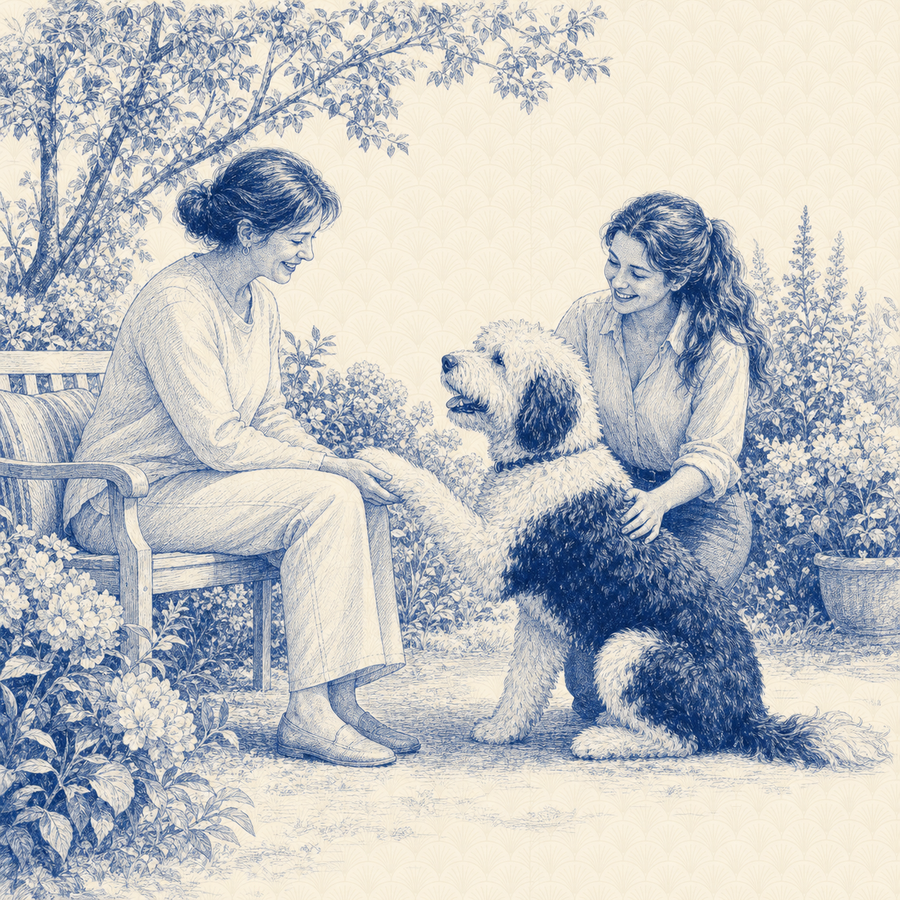
The Sheepadoodle is a modern designer cross — Old English Sheepdog over Poodle — that rose with the doodle boom of the 2000s, prized for a low-shedding coat and a gentle family temperament. A widely repeated tale credits 1960s US Army breeding, but no source substantiates it; treat it as lore. Like all crosses it has no kennel-club standard, and its size and coat vary with the Poodle used.
Questions, answered
Do Sheepadoodles shed?
Usually little, thanks to the Poodle coat — but low-shedding means high-grooming, and shedding varies by litter. Not a guaranteed hypoallergenic dog.
How big do they get?
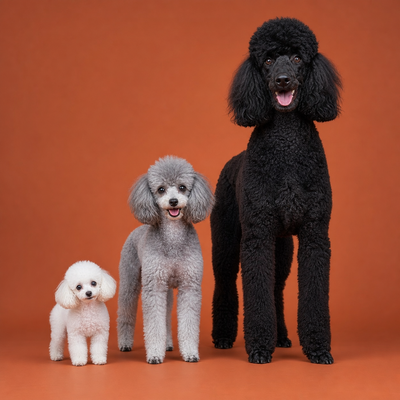
It depends on the Poodle used: minis run around 25–45 pounds, standards 50–80. There is no breed standard, so ask the breeder about the parents.
Are they good family dogs?
Generally excellent — affectionate, patient, and playful. Just plan for the herding drive and the exercise a working cross needs.
Did the US Army really create them?
It’s a popular story with no verifiable source. The honest answer is that the modern Sheepadoodle is a product of the recent doodle boom.