Shetland Sheepdog
A collie distilled by island weather.
The Shetland Islands sit a hundred miles off the north of Scotland, treeless and wind-scoured, and they make everything small. The ponies came out small. The sheep came out small, and half-wild. And the crofters’ dog — the quick-eyed herder that kept those sheep out of the kale patch and off the drying fish — came out small too: an economy of an animal, for a place where nothing could afford to be big. Mainland visitors saw a miniature collie and wanted one. The islanders knew better. They had not bred a smaller dog. They had bred a concentrated one.
Brilliant, and watching you
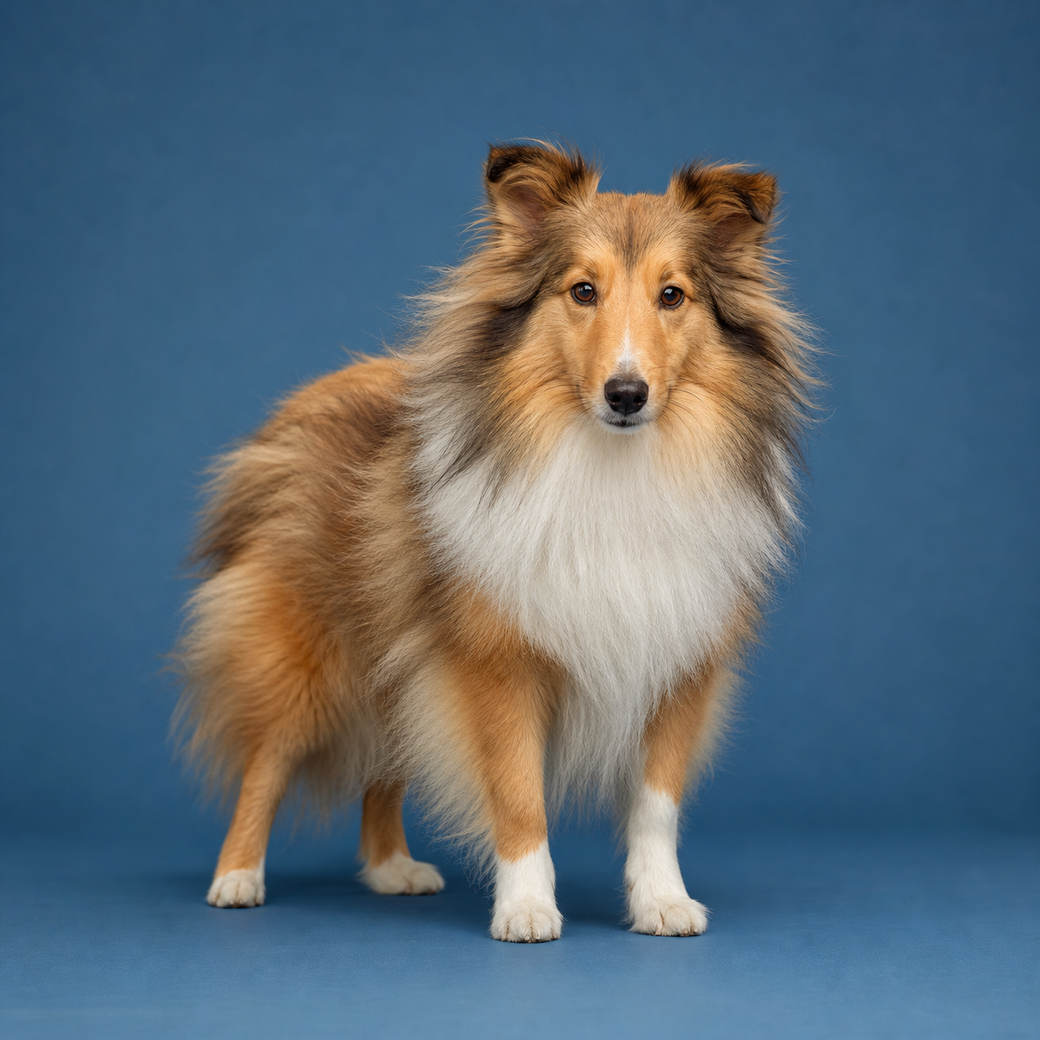
The collie comparison caused actual paperwork. The breed was first registered as the Shetland Collie, until collie fanciers objected loudly enough that by 1909 the little herder had been renamed the Shetland Sheepdog — a dispute the dogs themselves never entered. What nobody has ever disputed is the mind. Shelties are fixtures at the top of the obedience and agility world, so precise and so attuned that trainers talk less about teaching them than about being overheard. They notice everything: your shoes, your tone, the difference between Saturday and Monday.
That sensitivity is the whole deal, both directions. A Sheltie bonds completely, reads the household like a shift supervisor, and wants employment — training, games, a sport, errands, anything with structure. The costs are named plainly: they bark, with conviction and commentary; they shed, spectacularly, twice a year atop the everyday baseline; and the herding software may try to organize running children and passing bicycles. They are reserved with strangers and devoted past reason to their own. Give a Sheltie a job and a person, and they are close to the ideal family dog.
Keeping one happy
Grooming
The long double coat asks for a thorough brush once or twice a week — daily during the big seasonal sheds, when the undercoat leaves in clouds — with special attention behind the ears and under the elbows, where mats start. Never shave it; the coat insulates both ways. Baths only as needed.
Training
Among the easiest breeds in the world to train, and one of the most easily bruised: Shelties wilt under harsh handling and flourish under praise. Channel the brains early — obedience, agility, tricks, herding games — and teach a quiet cue in puppyhood. They will learn it quickly. They learn everything quickly.
Exercise
An hour or so a day, and make some of it mental: fetch with rules, agility in the yard, training games that end in applause. A walked-but-bored Sheltie is still a bored Sheltie, and bored Shelties narrate. The herding instinct needs outlets, not opportunities — mind the joggers.
Diet
Two measured meals for a small, busy dog, with treats budgeted against a training habit that earns them steadily. Shelties can drift toward plumpness under all that coat, where it hides — check with your hands, not your eyes. Some carry a gene affecting certain medications; ask your vet about MDR1 testing.
Off the islands, into the ribbons
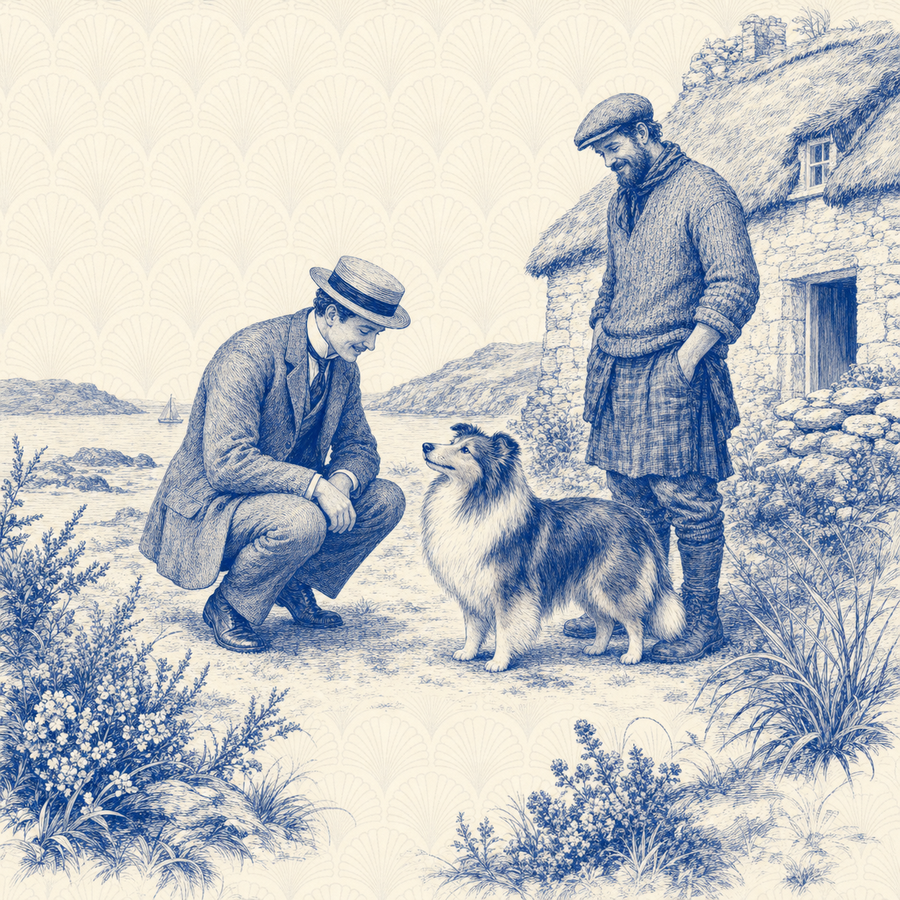
Mainland fanciers discovered the islands’ little herder around the turn of the last century and set about standardizing it, crossing in show collies to refine the type until the parent clubs called a halt. The AKC recognized the breed in April 1911; the first American champion, Lerwick Rex, finished in 1914. The islands kept the ponies. The rest of the world took the dog.
Questions, answered
Do Shetland Sheepdogs shed a lot?
Yes — steady shedding plus two dramatic seasonal blows a year. The coat is glorious and the vacuum earns its keep. Not hypoallergenic.
Do Shelties bark a lot?
They are famous for it — alert, vocal, and editorial. Early quiet-cue training and plenty of occupation keep it manageable.
Are Shelties good with kids?
Gentle, playful, and devoted family dogs — though the herding instinct can mean circling or nipping at running children. Train the dog, brief the kids.
Can a Sheltie live in an apartment?
Yes, with honest daily exercise, mental work, and bark training. Size-wise they are ideal; volume-wise they are a project.