Staffordshire Bull Terrier
A fighter’s frame with a babysitter’s reputation.
In the 1880s, a young transport rider named Percy FitzPatrick drove ox wagons through the South African bushveld with a bull-terrier at his heel — Jock, the runt of a litter of six, who grew into the bravest dog in the country’s memory. The bedtime stories FitzPatrick told his children about Jock so delighted a family friend, one Rudyard Kipling, that he insisted they become a book. ‘Jock of the Bushveld’ (1907) has run through more than a hundred editions and never left print in South Africa — and Stafford people everywhere claim Jock, plausibly if not provably, as one of their own.
Tough crowd, soft center
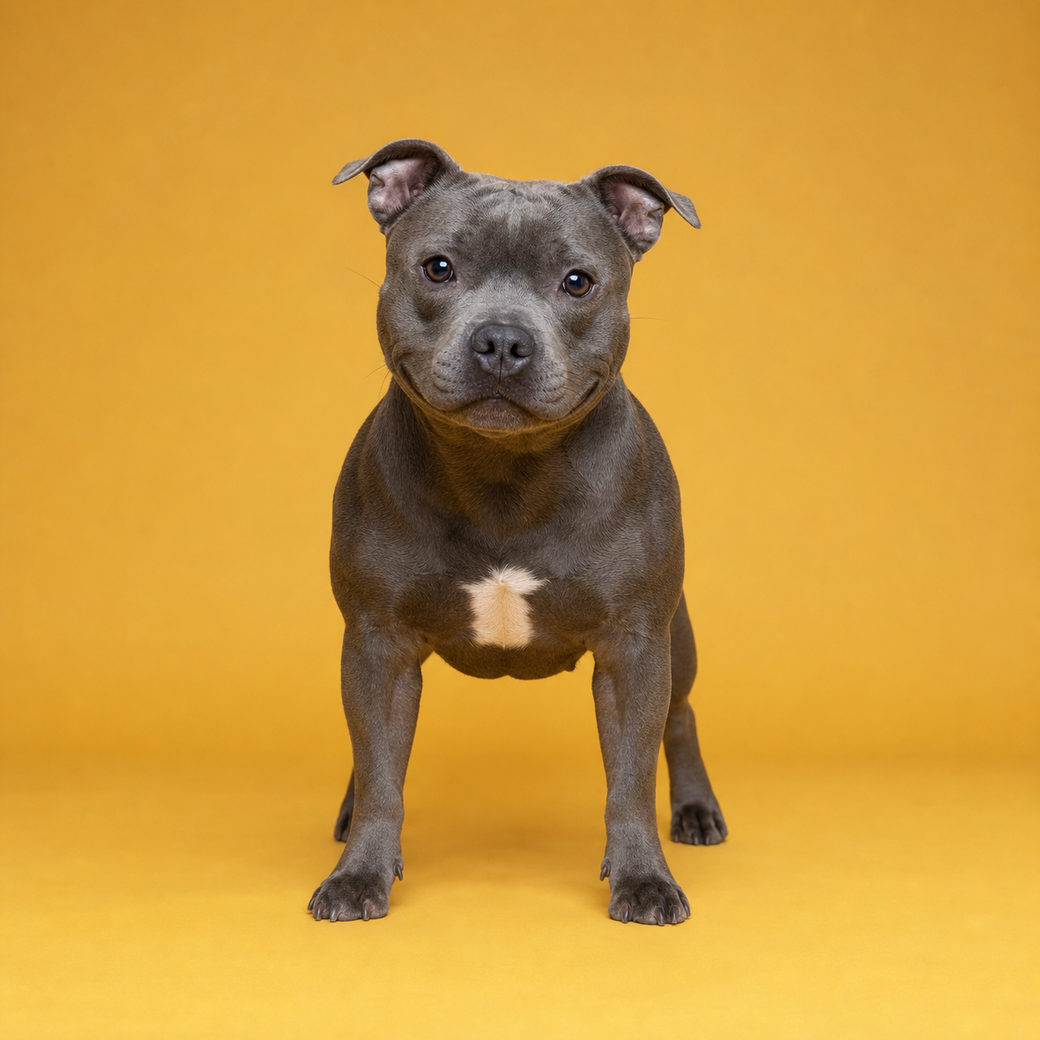
In England, where the breed is reliably among the country’s most popular dogs, Staffords carry an affectionate folk title — the nanny dog, for their famous patience with children. Historians point out, fairly, that the nickname is modern folklore, and that no dog of any breed should ever be left in charge. Both things are true. But the observation underneath is real enough that the breed’s official British standard — not a document given to gushing — calls them ‘totally reliable’ and notes a particular affection for children. The reputation is contested. The devotion is not.
At home, that devotion is a full-contact sport. A Stafford is a compact, heavily muscled dog who has concluded that your lap is load-bearing — they greet hard, lean harder, and genuinely suffer when left alone too long. Be honest about the rest: many are choosy about other dogs, a leftover from the bad old work, and it responds to early socialization and steady management, not to optimism. In some cities and buildings, the silhouette alone triggers restrictions. What they ask of an owner is exercise, structure, and occasional advocacy. What they give back is everything they have.
Keeping one happy
Grooming
The short coat asks almost nothing: a weekly rubdown with a grooming mitt, an occasional bath, done. Shedding is steady but modest. Spend the spare time on nails and teeth — and remember that a sun-worshipping shorthair can genuinely burn; shade and good timing are kinder than lectures.
Training
Eager, clever, and hungry for your approval — Staffords train beautifully with rewards, consistency, and an early start. Prioritize puppy socialization and loose-leash manners before the muscle arrives, and give the enthusiasm a career: agility, rally, structured tug. A well-mannered Stafford is the ambassador this breed genuinely needs.
Exercise
An hour or more of daily effort: brisk walks, sprints, fetch, a flirt pole for the fast-twitch joy of it. Mind the heat — enthusiasm outruns their cooling system on hot days. A worked Stafford naps like a professional; an unworked one takes it out on the furniture.
Diet
Muscle runs on measured meals: two a day, protein-forward, portioned to keep an actual waistline, because Staffords are enthusiastic eaters who gain quietly. Count training treats against the day’s total. Lean matters double here — the breed’s knees and hips age far better without the extra load.
From the pits to the parlor
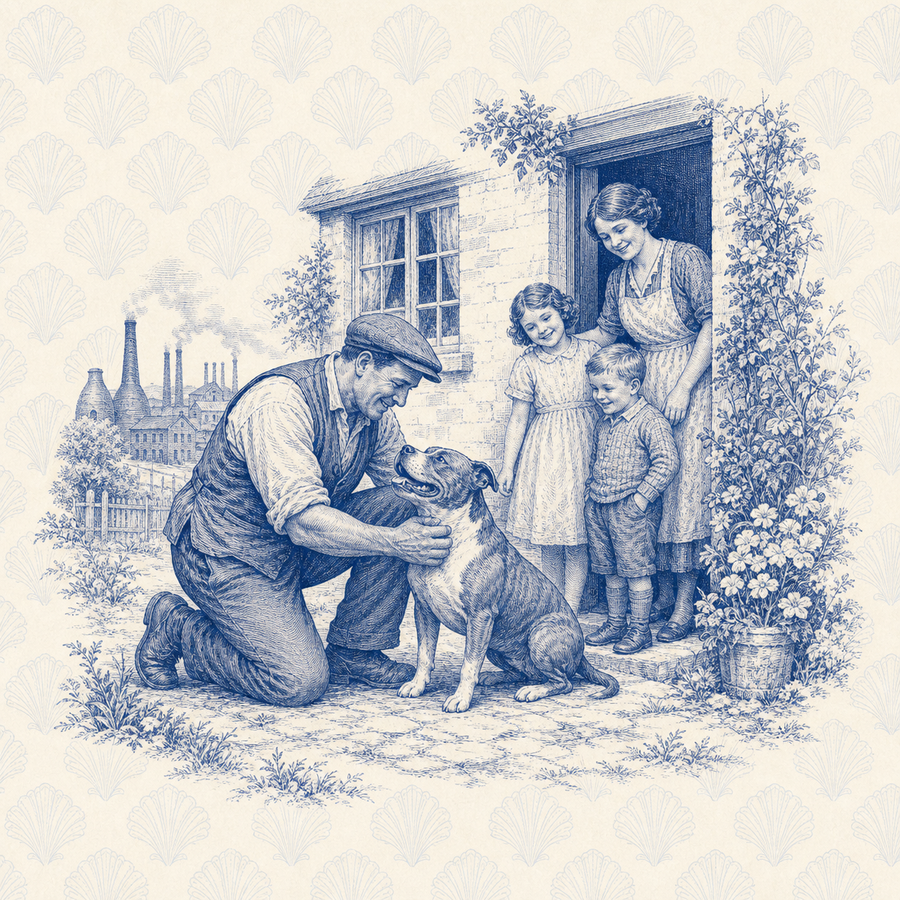
The Stafford was forged in the Black Country of the English Midlands, where nineteenth-century miners and ironworkers crossed bulldogs with quick local terriers — first for the fighting pits, then, as the laws and the culture changed, for the parlor. The Kennel Club recognized the breed in 1935, drawing a line under the old business for good. The AKC followed in 1974, as its 121st breed.
Questions, answered
Is a Staffordshire Bull Terrier a pit bull?
“Pit bull” is a loose category, not a breed. The Stafford is a distinct, smaller breed recognized by the KC and AKC — though some local rules lump the whole family together, so check before adopting.
Are Staffies really good with kids?
The breed standard itself notes their affection for children, and family devotion is the breed’s calling card — with the same supervision any strong, bouncy dog warrants.
How are Staffords with other dogs?
Often selective. Early socialization and careful introductions matter; many adults prefer a few known dog friends to a crowd.
Do Staffordshire Bull Terriers shed?
Moderately and year-round — the short coat keeps it easy work. Not hypoallergenic.