Standard Schnauzer
Germany’s farm manager, now managing you.
In Stuttgart there is a fountain called the Nachtwächterbrunnen — the night watchman’s fountain — and at the bronze watchman’s feet trots a compact, bearded dog that schnauzer fanciers everywhere have claimed on sight. It is the right dog for the job. For centuries the bearded farm dogs of southern Germany worked as all-purpose staff: ratter in the stable, sentry on the market cart, escort on the dark walk home. Three schnauzer sizes eventually came out of that tradition, and this one — the Standard — is the original. The other two, whatever their pedigrees say, are tributes.
The original all-rounder
Schnauzer lore reaches back to the Renaissance: fanciers hold that a bearded dog of unmistakably schnauzer type appears in works by Albrecht Dürer from the 1490s onward. Art historians are politer than to certify a breed from a five-hundred-year-old print, but the type is genuinely old, and so is the job. The name is pure description — Schnauze is German for snout, Schnauzbart a walrus mustache — and it stuck after a wire-haired dog actually named Schnauzer took first at a Hanover show in 1879. The famous beard was armor: matted whiskers protected the face from the teeth of cornered rats.
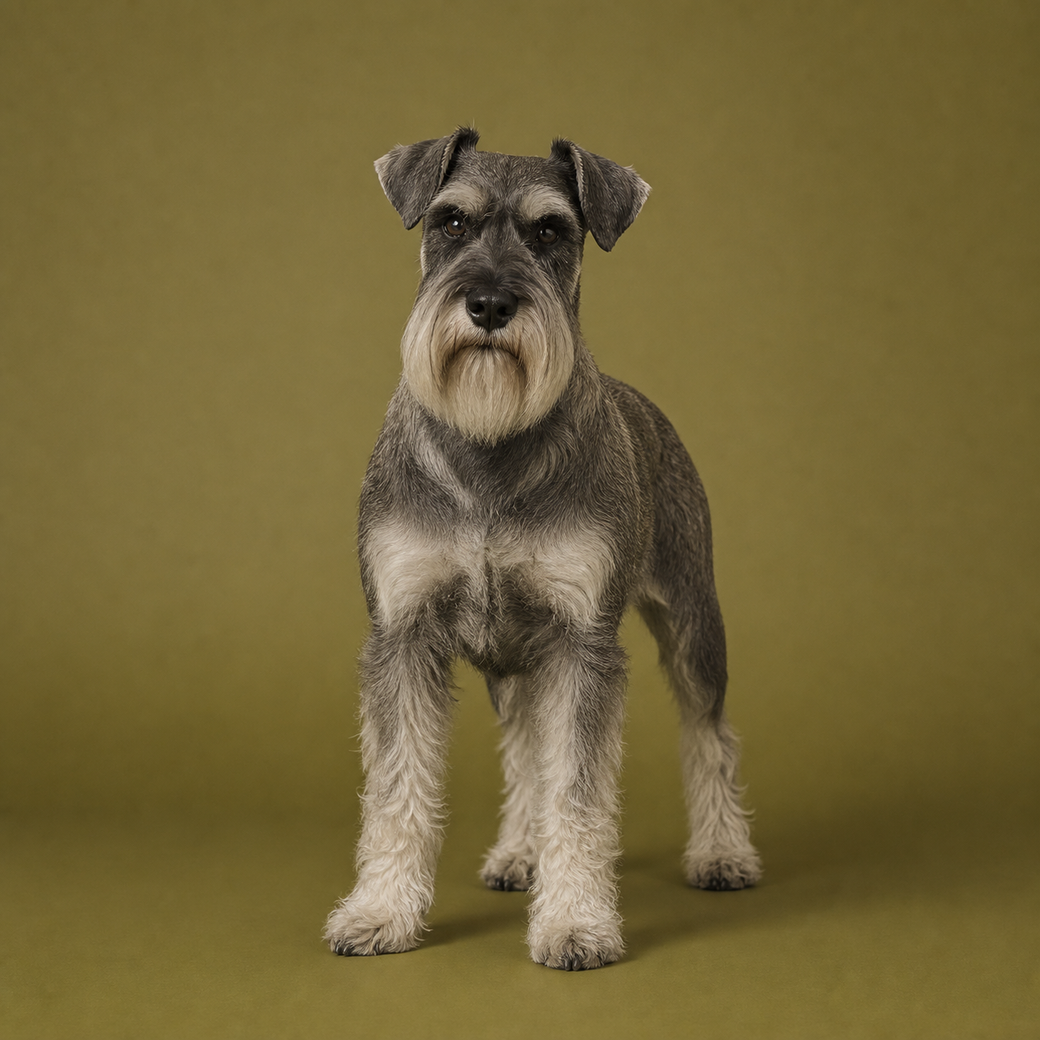
Living with a Standard means living observed. They keep track of the household’s schedule, its visitors, and its rules, and they have views on all three. The intelligence is top-shelf and slightly weaponized: under-occupied, a Standard makes their own fun, usually at the expense of something you own. They are sturdy, playful, protective without paranoia, and devoted to their people with a thoroughness that borders on the administrative. Give them daily work — sport, training, structured play — and the vigilance relaxes into charm; skip it, and the whole street will hear about it.
Keeping one happy
Grooming
Wiry coats barely shed, but they earn it: brush twice a week, and book hand-stripping every few months for the correct harsh jacket — or clip for the easier pet coat, which softens color and texture. Keep a towel by the water bowl; the beard files everything away for later.
Training
A quick, thinking student who learns in minutes and tests you for years — train with consistency, variety, and a sense of humor, because a Standard identifies a pushover in one session. Obedience, agility, scent work, and barn hunt all suit them. Socialize early and widely; the watchdog instinct needs a broad worldview.
Exercise
An hour or more a day, split between body and brain: brisk walks, hikes, fetch, puzzle work, a dog sport if you can. This is a medium dog with a working engine — shortchanged, the vigilance curdles into barking at the mail. Worked, they are calm, funny company.
Diet
Two measured meals a day keep a Standard in working trim — this dog should feel athletic under your hands, never upholstered. They are rarely picky and occasionally shameless; count training treats against the daily total. A lean schnauzer stays sound and busy well into the teens.
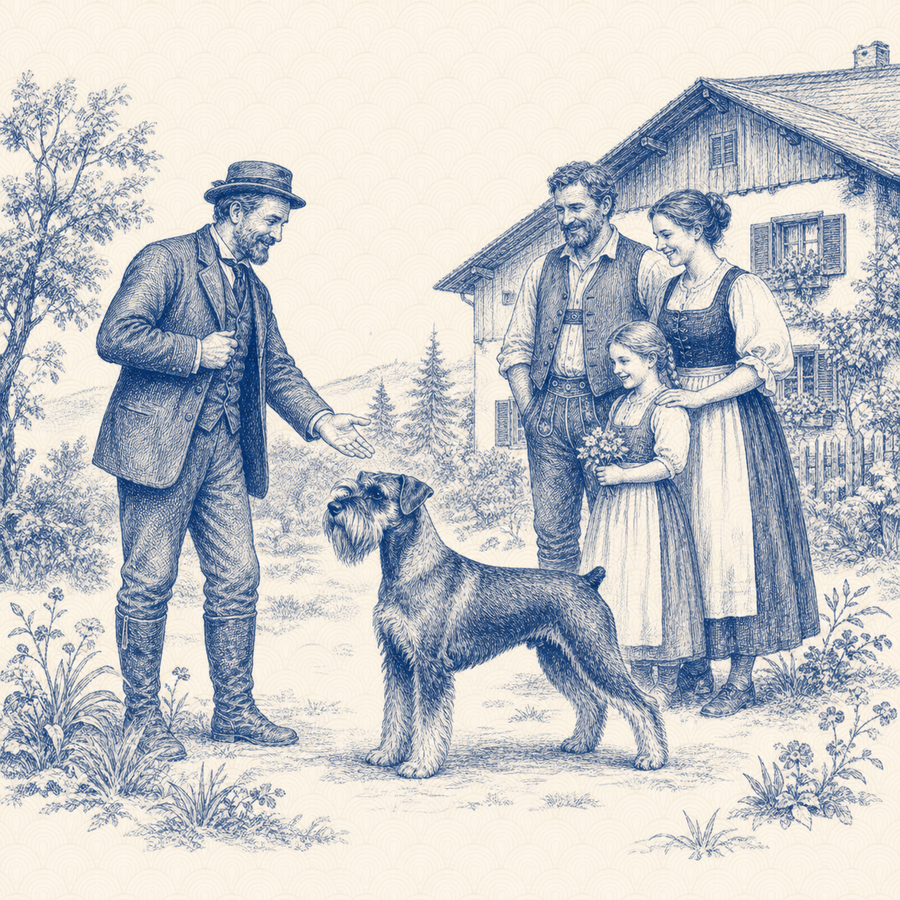
The farm’s whole staff, in one dog
Nineteenth-century German breeders refined the old farm type — crossing in gray Wolfspitz and black German Poodle for the signature pepper-and-salt coat — and the dogs reached America around 1900. The AKC recognized the Standard in 1904. In the First World War the breed carried dispatches for the Red Cross; in the peace that followed, the Miniature and the Giant it inspired arrived — and left the first schnauzer the rarest of the three.
Questions, answered
Are Standard Schnauzers hypoallergenic?
The wiry coat sheds very little, so they suit many allergy-sensitive homes — though no dog is truly 100% hypoallergenic.
What’s the difference between Standard, Miniature, and Giant Schnauzers?
Three separate breeds. The Standard is the centuries-old original; the Miniature and Giant were bred from it later, for smaller and larger jobs.
Do Standard Schnauzers bark a lot?
They’re born watchdogs and will announce visitors. With daily exercise and training the alerting stays reasonable; bored, the announcements multiply.
Are Standard Schnauzers good family dogs?
Excellent with their own family and famously good with children — sturdy, playful, and protective, with early socialization to polish the watchdog reserve.