Weimaraner
The gray ghost with an art career.
In 1970, the artist William Wegman got a Weimaraner and named him Man Ray, after the surrealist. The dog turned out to be the collaborator of a lifetime: solemn, sculptural, capable of holding a pose like a professional — a hunting breed’s stillness redirected at a camera lens. Wegman photographed him, then his successors, for more than four decades: fourteen Weimaraners, some fifteen thousand Polaroids, a body of work that reached Sesame Street and the Metropolitan Museum of Art. No other breed has an artistic œuvre. The Weimaraner, gray as a November morning, simply looks like art.
Never more than a step behind
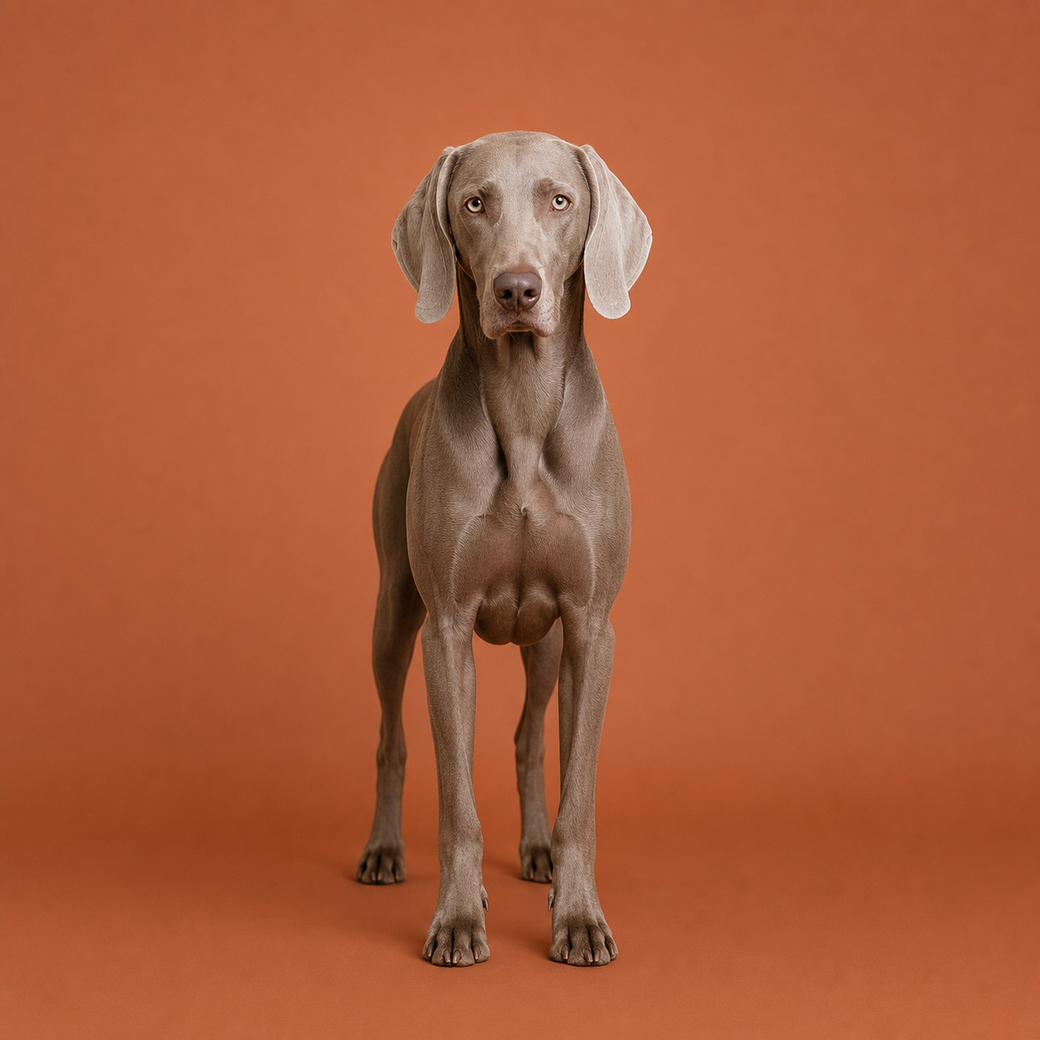
Hunters knew the look first. The breed was built in the early nineteenth century at the court of Weimar, where German nobles wanted one dog for big game — boar, bear, deer — and got something rarer: a silver-gray pointer with amber-to-gray eyes and a habit of staying glued to its person. Germany guarded the breed jealously; for the better part of a century you could hardly get one without joining the club first. Americans call them the Gray Ghost — for the coat, and for the way they materialize behind you in the kitchen.
“Velcro dog” is the term owners reach for: a Weimaraner does not follow you, they accompany you — room to room, opinion to opinion. Underneath the elegance is a serious athlete, bred to hunt all day, wired for real running and real work, and famously loud in their disagreement with being left alone. Separation anxiety is the breed’s honest weak point. Give them miles, jobs, and your company, and the payoff is a striking, comic, deeply attached companion — a ghost that never leaves your side, which is the point.
Keeping one happy
Grooming
The short silver coat is nearly self-cleaning: a weekly once-over with a rubber brush, an occasional bath, done. Shedding is real but modest, and the gray hairs hide politely in most rooms. Check the ears — a swimming, brush-crashing bird dog collects damp ears — and keep the nails short.
Training
Smart, fast, and pushy enough to test a soft-spoken household: start obedience early and hold the line kindly. They learn quickly and un-learn even faster when the rules wobble. Channel the hunting brain — retrieving, scent games, tracking — and socialize early and broadly. Consistency is the whole trick.
Exercise
Plan on an hour or two of hard exercise a day — running, full-sprint fetch, field work, long hikes. A walk around the block is a warm-up, not a workout. Under-exercised Weimaraners take up renovation: counters, couches, drywall. The energy goes somewhere; you choose where.
Diet
Feed measured meals twice a day and keep them lean — a fit Weimaraner shows a tucked waist and a hint of rib in motion. This is a classic deep-chested, bloat-prone breed: calm mealtimes, no hard running around dinner, and make sure everyone in the house knows the warning signs.
Bred at the court of Weimar
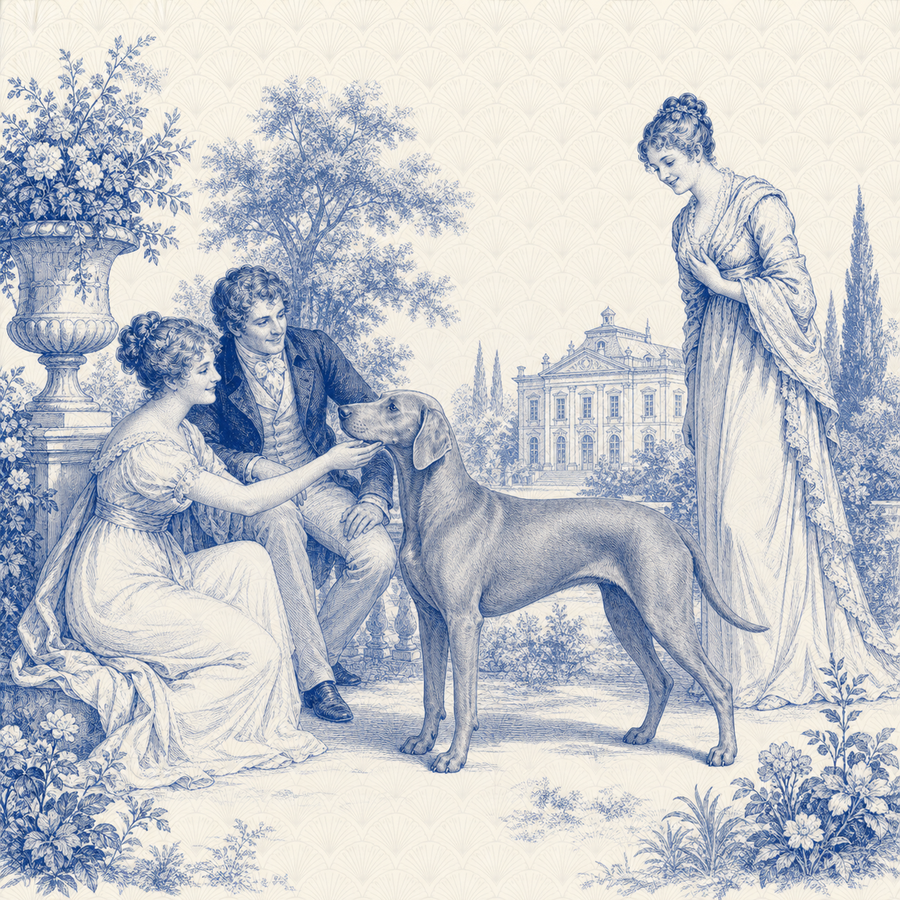
The Weimaraner was developed in and around the Grand Duchy of Weimar in the early 1800s — a nobleman’s all-purpose hunting dog for big game, later refined toward birds. The German breed club kept ownership tightly restricted, membership first and dog second, which kept quality high and numbers small. Americans finally secured their own in the late 1920s; the AKC recognized the breed in 1943.
Questions, answered
Why are Weimaraners called the Gray Ghost?
The coat, first — that unmistakable silver-gray — and the shadowing habit: they stay so close they seem to appear beside you rather than arrive.
Can a Weimaraner be left alone?
Not long, and not happily. Separation anxiety is a known breed issue; exercise, crate training, and gradual practice help, but this is a dog for households that are mostly home.
Do they shed?
Yes, moderately — the short gray hairs are just discreet about it. Not hypoallergenic.
Are they good with kids?
Devoted and playful with their own family, though they are big, fast, and bouncy — supervise around toddlers.