Whippet
The racehorse that fit in a miner’s kitchen.
Sunday morning in a northern English mining town, late in the nineteenth century: a straight two-hundred-yard track, a crowd of colliers, and a line of small, shivering sighthounds held at the start by handlers called slips. At the far end their owners kneel, waving towels and shouting. The dogs are loosed — and arrive in a blur, flat out after the fluttering rag. This was whippet racing, the collier’s weekend sport, and the dog bred for it was known across Lancashire and Yorkshire as the poor man’s racehorse. The rich man, then as now, had no better one.
Two speeds, no middle
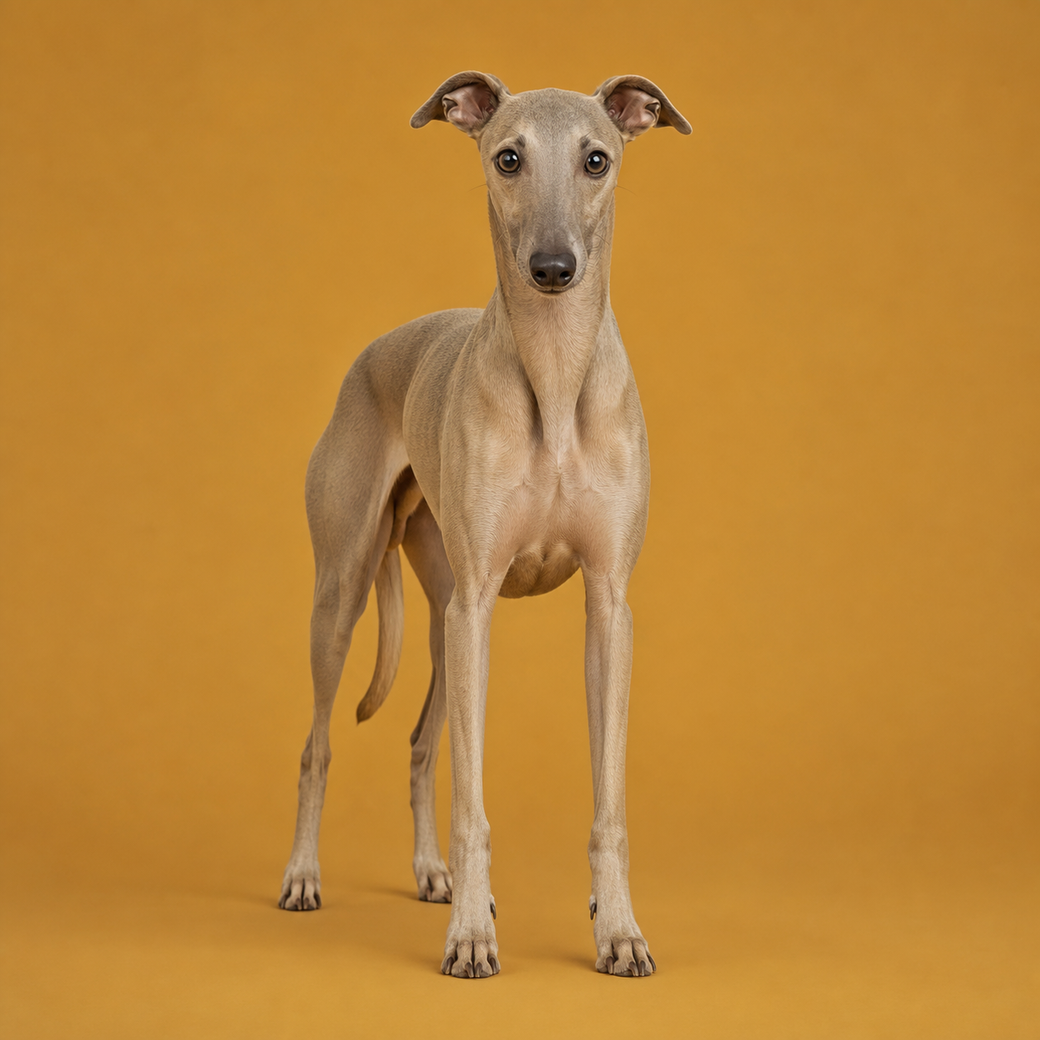
The numbers hold up a century later. Whippets are the fastest dogs of their weight on earth, capable of 35 miles an hour — and at the AKC’s Fastest Dogs USA finals in 2021, a whippet named Reas ran 100 yards in 5.769 seconds, beating a field drawn from 154 breeds to the national title. The Victorians called them snap dogs, a nickname usually traced to the way they snapped up rabbits. The recipe was never written down: small greyhound-type dogs, a rumored dash of terrier and Italian Greyhound, and generations of selection by stopwatch.
Then the race ends, and the other whippet appears. At home they are quiet, gentle, and remarkably low-effort — a dog that spends the day draped over soft furniture, conserving speed it sees no reason to waste. They rarely bark, shed lightly, and carry no doggy smell. The requirements are short and firm: a real sprint in a fenced space a few times a week, a leash anywhere rabbits are possible, a warm layer in winter, and padding under those unpadded bones. Harsh words genuinely wound them; this is a dog trained by kindness or not at all.
Keeping one happy
Grooming
Grooming is nearly a rumor: the fine coat wants a weekly pass with a soft mitt and the rare bath. Shedding is light; odor, famously, almost nil. The real care is skin and warmth — thin coats tear on rough cover and shiver in wind, so dress them honestly for the weather.
Training
Gentle and willing, but sensitive: whippets fold under harsh corrections and flourish in cheerful, food-paid sessions kept short. Housetraining goes smoothly; recall is decent right up until something bolts, at which point instinct outvotes obedience. Train it anyway — and trust a fence over all of it, every time.
Exercise
Budget for speed in bursts: one or two daily walks, plus a handful of genuine flat-out gallops each week inside secure fencing. Lure coursing and FastCAT are the breed’s idea of a holiday weekend. Between sessions they are stationary to a degree that alarms first-time owners. Nothing is wrong.
Diet
Feed to the silhouette: a whippet in condition shows the last ribs and a sharp tuck at the waist, and owners used to plumper breeds routinely overfeed them. Two measured meals a day; few are greedy, though some are choosy. Sighthound teeth appreciate an early brushing habit.
Out of the collieries, at speed
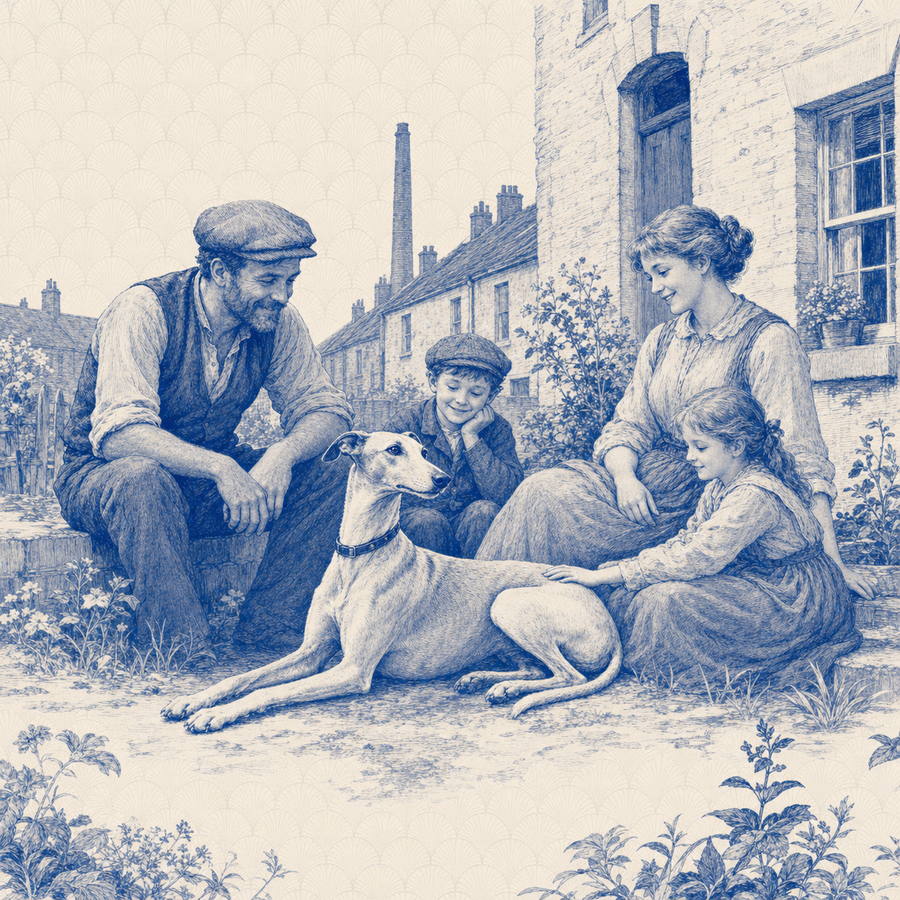
The whippet took shape in the mining and mill towns of nineteenth-century northern England — a working family’s greyhound, sized for a small house and raced on waste-ground tracks on rest days. English immigrants carried the breed across the Atlantic, and the AKC recognized it in 1888, three years before the Kennel Club got around to it at home. The racing instinct arrives intact in every generation.
Questions, answered
Are whippets good apartment dogs?
Surprisingly, yes — quiet, clean, and calm indoors, provided they get regular sprints in a safely fenced space.
How fast is a whippet?
Up to about 35 mph — the fastest breed of its weight. The record-setters at AKC speed trials are, year after year, whippets.
Can a whippet go off leash?
Treat them like any sighthound: fenced areas only. Recall loses to anything that runs, every single time.
Do whippets need coats in winter?
Yes — thin skin, short hair, and low body fat make cold genuinely uncomfortable. The sweater is equipment, not fashion.