Xoloitzcuintle
Three thousand years old and never needed a haircut.
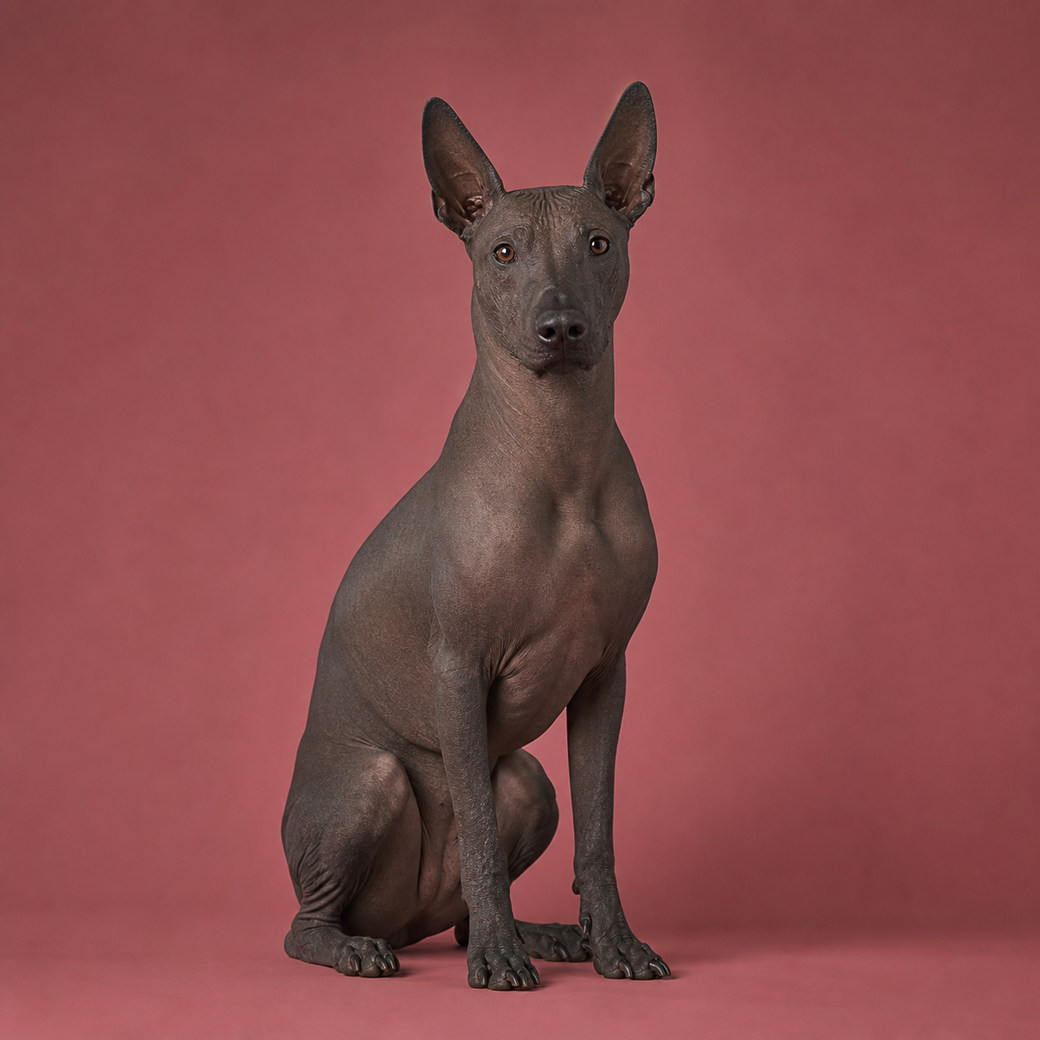
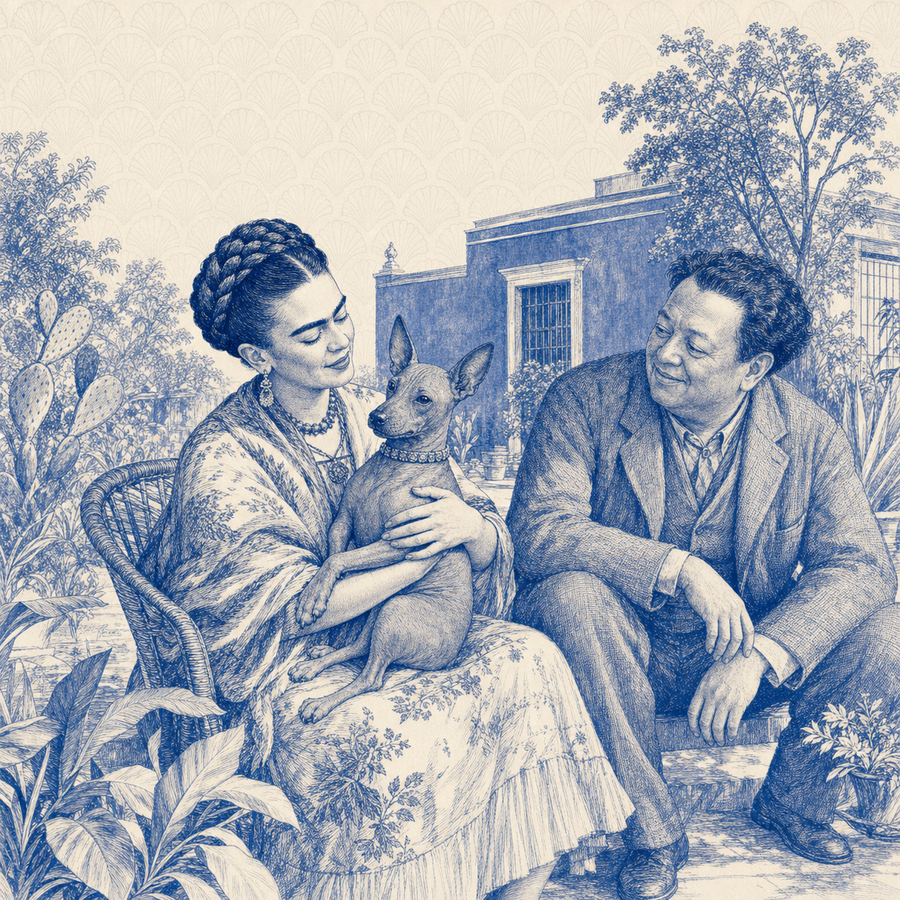
Frida Kahlo’s paintings keep a small, strange dog in their corners — gray, hairless, bat-eared, tucked into the crook of an arm. The dogs were hers. She and Diego Rivera kept Xoloitzcuintles at the Blue House in Mexico City, and her favorite, Señor Xolotl, earned a place in “The Love Embrace of the Universe” of 1949 — the painting later reproduced on Mexico’s 500-peso banknote. For a while, in other words, an entire country carried this dog in its wallet. It was only fair. The dog had been carrying Mexico’s history for three thousand years.
An ancient dog, still warm
Begin with the name: Xolotl, the Aztec god of lightning and death, joined to itzcuintli, dog. In Aztec belief the god shaped these dogs from a sliver of the Bone of Life, and their gravest duty came after a person’s death — guiding the soul down through the levels of the underworld. The Spanish conquest nearly erased them, and by the twentieth century the breed survived mostly in remote country. In 1954 an expedition went looking and found ten purebred Xolos; from those ten dogs, Mexico’s kennel club rebuilt the breed and recognized it within two years.
The living animal feels older than other dogs — calm, watchful, close to their family and formal with everyone else. The hairless skin runs noticeably warm, which owners come to regard as a household utility, particularly in winter laps. It asks small kindnesses: sun protection in summer, a sweater in the cold, the occasional bath. Many litters also include coated puppies, born fully furred and otherwise identical. Adolescents are athletic mischief; adults settle into a nearly ceremonial serenity. Give the natural watchfulness early socialization to lean on, and expect polite reserve with strangers forever.
Keeping one happy
Grooming
No coat does not mean no care: hairless skin wants a gentle bath every few weeks, sunscreen on pale areas in strong sun, and a light moisturizer when it runs dry. Adolescents get acne, as adolescents do. Coated Xolos need only a weekly brush. Neither variety carries much odor.
Training
Intelligent and observant, with a primitive breed’s independent streak: they learn quickly, bore quickly, and read your moods with unsettling accuracy. Keep training calm, consistent, and reward-based, and make early, broad socialization the first project — natural watchfulness hardens into suspicion without it. Adolescence tests fences, patience, and furniture.
Exercise
Moderate and manageable: a good daily walk or two, play in a fenced yard, and something for the mind. Adults are famously calm indoors; adolescents are famously not, so budget extra outlets for the first two years. In cold climates, exercise happens in a sweater, and nobody is embarrassed.
Diet
An easy keeper with an efficient metabolism: two measured meals a day, portioned to keep a visible waist — Xolos range from ten to fifty-five pounds, so feed the dog in front of you. Many owners find skin condition tracks diet closely; a consistent, high-quality food shows on the surface.
Recognized, forgotten, recognized again
Ceramic dogs unmistakably like the Xolo appear in ancient West Mexican tombs, and the breed padded through three thousand years of Mexican life largely unchanged. The paperwork was less steady: the AKC registered its first Xolo — a dog named Mee Too — in 1887, dropped the breed as extinct in 1959, and recognized it again in 2011. Mexico City declared the Xolo a cultural heritage symbol in 2016.
Questions, answered
Are Xolos hypoallergenic?
Often a good fit for allergy-sensitive homes — there is little or no hair to shed — but allergens live in skin and saliva too, so no dog is a guarantee. Meet one first.
What sizes do Xoloitzcuintles come in?
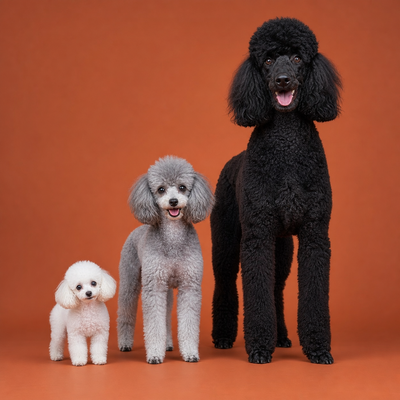
Three — toy, miniature, and standard — running from roughly 10 to 55 pounds.
Do hairless Xolos need sunscreen?
Yes, on pale or pink skin in strong sun — plus a sweater in cold weather. The skin is tough, but it is still skin.
Are Xolos good family dogs?
Calm, loyal, and gentle with their own family, reserved with strangers. Early socialization matters more here than with most companion breeds.