Yorkshire Terrier
A war hero you could carry in a backpack.
In March 1944, a soldier heard noises in an abandoned foxhole near Nadzab, New Guinea, and lifted out a full-grown Yorkshire Terrier — four pounds, seven inches tall, provenance unknown. Corporal Bill Wynne bought her for two Australian pounds and named her Smoky. A year later, at an airbase on Lingayen Gulf, engineers needed a wire run through an eight-inch pipe seventy feet long — a job that would otherwise keep men and forty aircraft exposed on an active airfield for days. Wynne tied a kite string to Smoky’s collar and sent the smallest soldier in the Pacific into the dark.
Silk outside, steel underneath
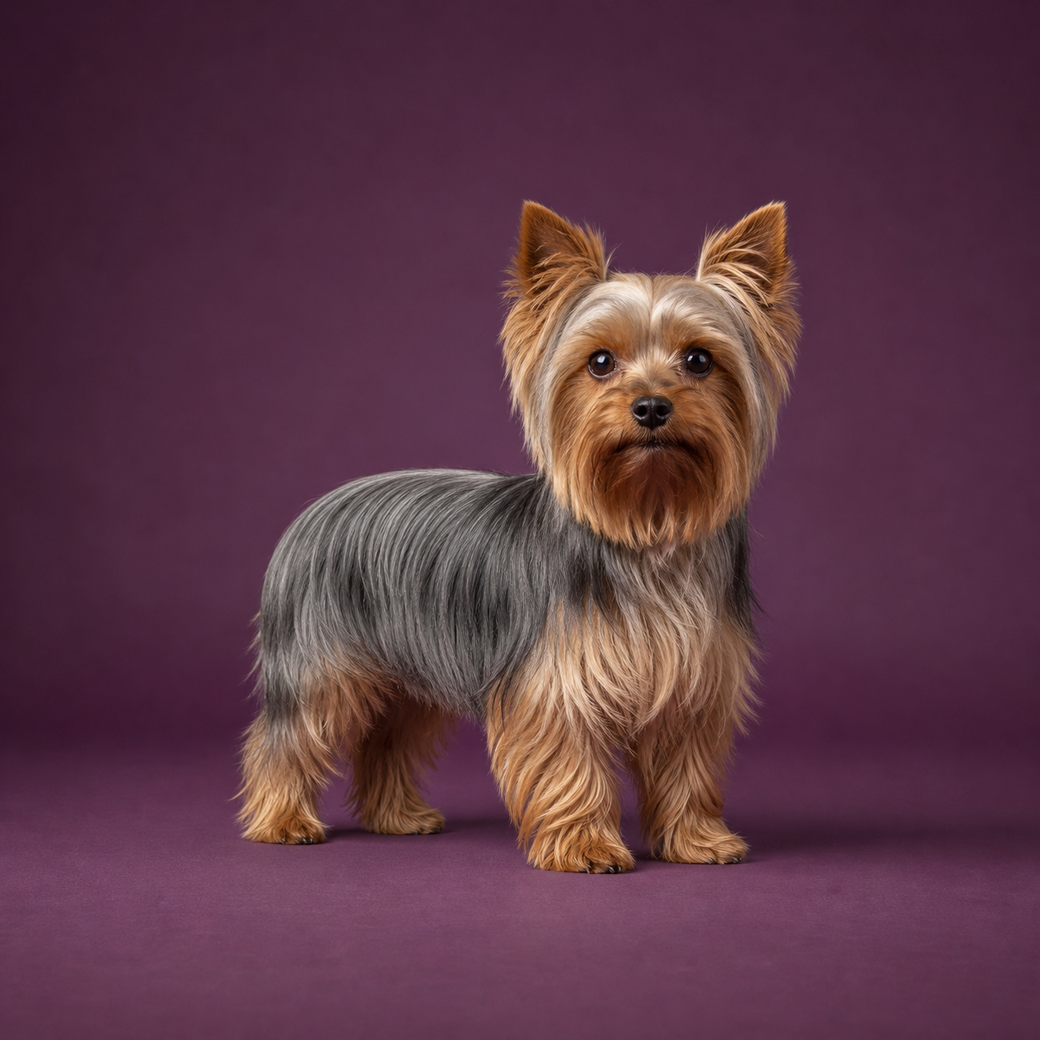
The breed’s first celebrity was also its architect. Huddersfield Ben, born in 1865 and owned by a Bradford fancier, won 74 prizes in a six-year life and stamped his type so thoroughly on the breed — the steel-blue silk, the tiny frame — that he is universally called its foundation sire. Ben weighed a strapping nine to twelve pounds himself but reliably sired the under-seven-pound dogs Victorian fashion demanded. Killed by a carriage in 1871, he was mourned in the dog press, preserved by a taxidermist, and displayed like the treasure he was.
The modern Yorkie still runs the old ratter software. Under the floor-length show coat lives a genuine terrier — brave past all reason, alert to every doorbell, cheerfully certain of their authority over dogs twenty times their size. They bond hard to their people and make superb city companions: portable, low-shedding, endlessly interested in household affairs. The honest ledger: a coat that mats without steady work, a watchdog voice the whole floor will hear, housetraining that takes months of patience, and bones too fine for rough toddler love. Seven pounds, carried with the gravity of seventy.
Keeping one happy
Grooming
That famous coat is closer to human hair than fur, silky and ever-growing: brush daily if you keep it long, or hold a short puppy cut on a six-to-eight-week salon cycle. Either way, wipe the eyes regularly and brush the teeth — the crowded little mouth is where trouble starts.
Training
Clever and quick, with a terrier’s view of authority as a suggestion: keep sessions short, rewards small and constant, and expectations consistent. Housetraining is the famous sticking point — a schedule and a crate beat scolding every time. Teach a settle cue early, before the watchdog instinct writes its own rules.
Exercise
Modest and mostly portable: a couple of short daily walks plus vigorous living-room play squares the account. The terrier engine likes a job — fetch down a hallway, a snuffle mat, trick practice — and the whole athletic program fits in an apartment. Mind the cold; four pounds chills fast.
Diet
Small, frequent, and measured: toy puppies can tip into low blood sugar quickly, so feed several small meals early on, settling to two or three as adults. Choose a quality small-breed food, and weigh the treats — at this scale, a little generosity goes straight to the waistline.
From the mills to the lap
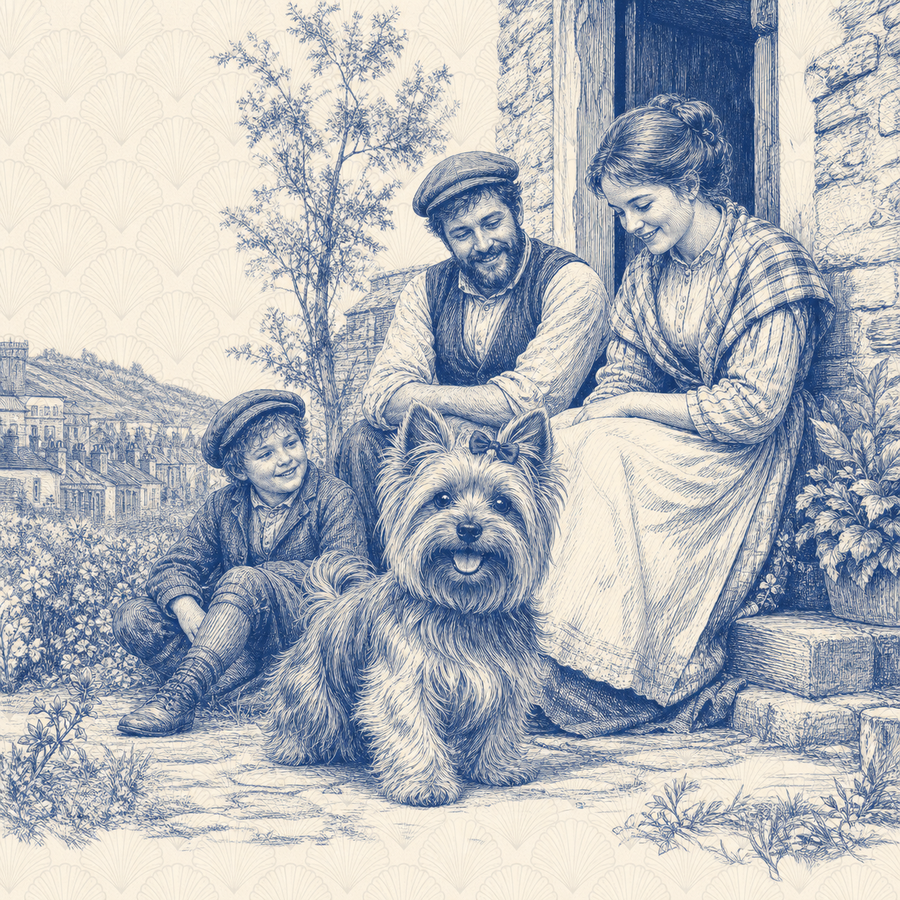
Scottish weavers migrating to Yorkshire’s mill towns in the mid-1800s brought their small terriers along, and the mills bred them into a compact ratter with an unaccountably beautiful coat. Named the Yorkshire Terrier around 1870, the dog traded vermin work for velvet cushions within a generation. The AKC recognized the breed in 1885 — among its earliest — and Yorkies have stayed near the top of the registry ever since.
Questions, answered
Are Yorkies hypoallergenic?
One of the better choices for allergy-sensitive homes — the silky coat sheds very little — though no dog is truly 100% hypoallergenic.
How big do Yorkshire Terriers get?
The breed standard calls for seven pounds or under; many pet Yorkies run a little larger, and sturdier is no bad thing.
Do Yorkies bark a lot?
They are born watchdogs with big opinions. Training, exercise, and a settle cue keep the news cycle manageable.
Are Yorkies good with children?
Better with gentle older kids — the temperament is game, but a fine-boned toy dog and toddler play are a poor match.